
Categories
southbay neighborhood guidesPublished October 30, 2026
Living in Rolling Hills Estates, CA: The Complete Guide

By Frank Kenny, REALTOR® (DRE #01250123) · Frank Kenny Real Estate Team, eXp Realty of Greater Los Angeles · Updated October 2026
Rolling Hills Estates is a small, horse-friendly city of about 8,000 people on the north side of the Palos Verdes Peninsula, with more than 25 miles of bridle trails, white three-rail fences, Peninsula schools and the Peninsula's main shopping district, the Promenade on the Peninsula and Peninsula Center. It's the most "everyday convenient" of the four Peninsula cities, and the closest to Torrance.
I've sold homes in the South Bay since 1998, and Rolling Hills Estates (often shortened to "RHE") is where many Peninsula families end up doing their errands, even if they live somewhere else. Here's what it's like to live there, what homes cost, and what to check before you buy.
Rolling Hills Estates at a Glance
| Fact | Rolling Hills Estates |
|---|---|
| Population | 8,280 (2020 Census); 7,948 (Census estimate, July 2025) |
| Incorporated | September 18, 1957 (LA County's 60th city) |
| Land area | 3.58 square miles |
| ZIP codes | 90274, 90275 |
| School district | Palos Verdes Peninsula Unified (Niche: A+, #3 of 465 California districts, checked October 2026) |
| Distance to LAX | About 14 miles by car from City Hall |
| Distance to downtown LA | About 25 miles by car |
| Typical homes | Ranch-style single-family homes, horse properties, plus some townhomes and condos |
| Owner-occupied homes | 87.6% (ACS 2020–2024) |
| Market snapshot | Median sale price about $2.3M, three months ending September 2026, up 12.3% year over year (Redfin) |
What Is It Like to Live in Rolling Hills Estates?
Living in Rolling Hills Estates feels semi-rural on the residential streets and suburban-convenient near the shopping district, all within 3.58 square miles. The city's stated vision is to "enhance the pastoral character of the community by preserving open space and promoting the equestrian lifestyle," and you see it in the white fences, the bridle trails that run beside the roads, and the equestrian crossings the city maintains on its roads.
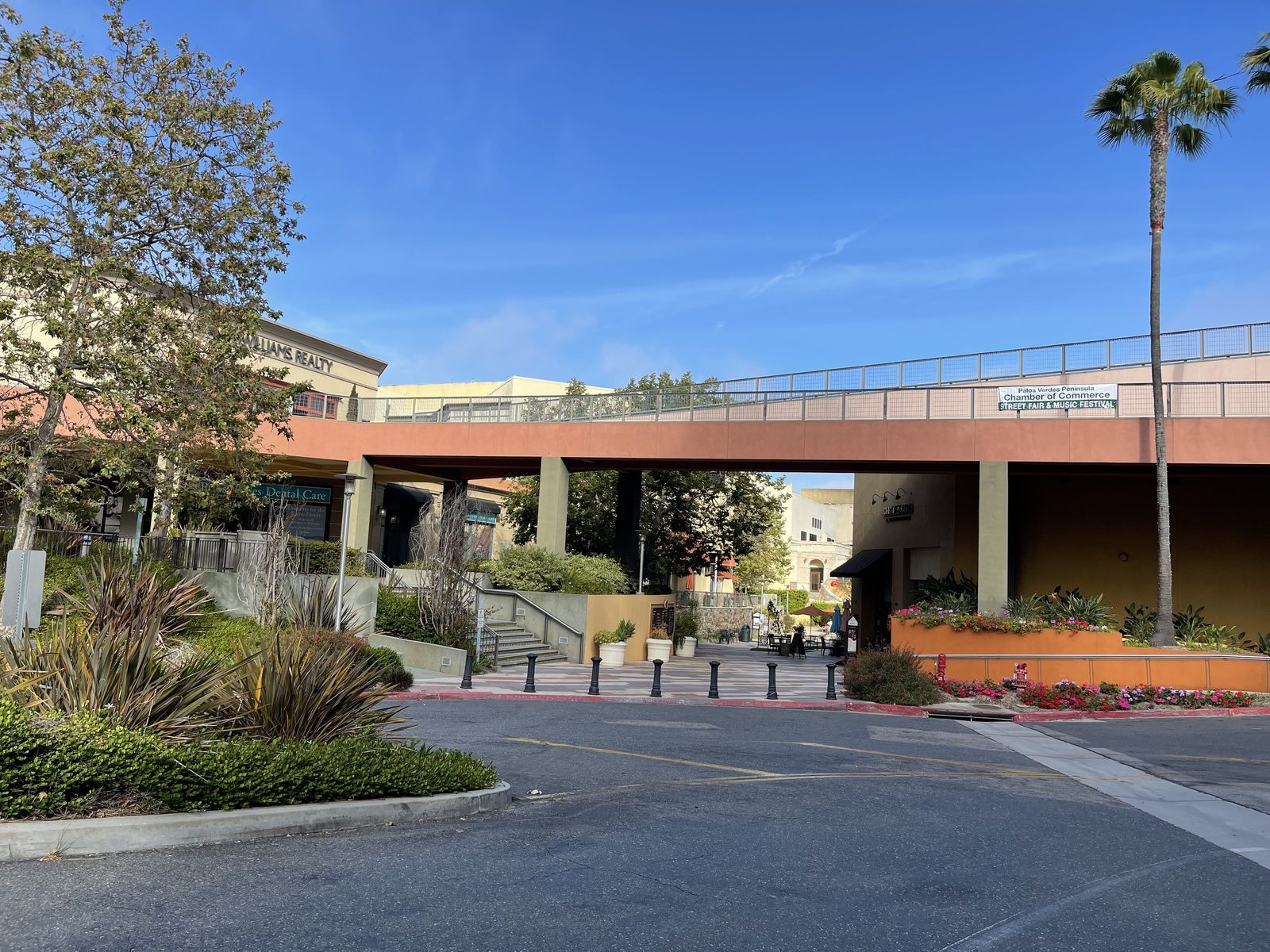
The Promenade on the Peninsula shopping center (2022). Photo: DocFreeman24, CC BY-SA 4.0, via Wikimedia Commons
According to the city's history, Rolling Hills Estates became Los Angeles County's 60th city on September 18, 1957, with only about 3,500 residents, who were united, in the city's words, by concern for "maintaining the community's rural atmosphere and equestrian lifestyle." It grew through annexations in the 1950s and '60s, including Peninsula Center, and in 1982 it added the site of the former Palos Verdes Landfill. Today the city counts 30 neighborhood areas, each with its own homeowners association. The 2023 American Community Survey put the median household income at about $187,500.
What Is the Equestrian Lifestyle Like in Rolling Hills Estates?
Rolling Hills Estates is one of the few places in the South Bay where you can keep or board a horse and ride from home. The city says it has more than 25 miles of bridle trails, and it runs the public riding rings itself.
- Peter Weber Equestrian Center: the city's municipal boarding stable, managed by PWEC Enterprises, with horse boarding, trailer storage and training.
- Ernie Howlett Park and Chandler Park: parks the city lists among its equestrian facilities.
- South Coast Botanic Garden trail crossings: the city publishes the dates for the bridle and hiking trail crossing at the garden on Crenshaw Boulevard.
- Horsekeeping rules: the city publishes horsekeeping practices and turn-out and lunging guidelines. If you're buying to keep horses, confirm the lot's zoning and the HOA's rules in writing.
You don't need to own a horse to live here, and many residents don't. But expect trail easements, riders at crosswalks and the occasional horse trailer on the road. In September 2026, for example, the city posted a bridle trail detour for its Palos Verdes Drive North and Dapplegray School intersection project.
What Are the Neighborhoods in Rolling Hills Estates?
Rolling Hills Estates is made up of about 30 neighborhood areas, each with its own homeowners association. These are some of the names the city lists in its history:
- Montecillo: one of the first areas annexed in 1959.
- Country Club Estates: another 1959 annexation.
- Masongate: the northern part of Masongate joined in 1959.
- Rolling Hills Park Estates and the Ranch: residential areas annexed between 1960 and 1966.
- Hillcrest Manor and Hillcrest Meadows: 1960s annexations with their own HOAs.
- Highridge, Harbor Sight and Cresta Verdes: areas added in the 1960s.
- Peninsula Center: annexed in the 1960s and now part of the city's commercial core.
Because each area has its own HOA, rules on fences, additions and animal keeping can differ from one street to the next. Ask for the HOA documents early.
What Kind of Homes Are in Rolling Hills Estates, and What Do They Cost?
Rolling Hills Estates is mostly single-family homes, and Redfin reports a median sale price of about $2.3 million ($2,293,908) for the three months ending September 2026, up 12.3% from a year earlier. Homes sold in about 36 days on average, down from 54 days the year before, and Redfin rates the market "very competitive."
Many homes are ranch-style houses on larger lots, some with room for horses, alongside some townhomes and condos. According to the Census Bureau, 87.6% of homes are owner-occupied, and the median value of owner-occupied homes in its 2020–2024 survey was $1,692,600. Since the median sale price mixes condos with horse properties, compare a home only to recent sales of the same type.
What Are the Schools Like?
Rolling Hills Estates is in the Palos Verdes Peninsula Unified School District, which Niche grades A+ and ranks #3 of 465 districts in California (checked October 2026). Niche reports 10,177 students and a 22-to-1 student-teacher ratio.
Palos Verdes Peninsula High School is in Rolling Hills Estates, and PVPUSD also runs Palos Verdes High School in Palos Verdes Estates. Private options in the city include Rolling Hills Country Day School (K–8) and Chadwick School (K–12, founded 1935). School assignment depends on the address, so check with the district.
What Is There to Do in Rolling Hills Estates?
Rolling Hills Estates is the Peninsula's shopping and errands hub. The city describes "a mile-long commercial district" with open-air plazas, a movie theater, an ice rink, restaurants, national retailers and local shops.
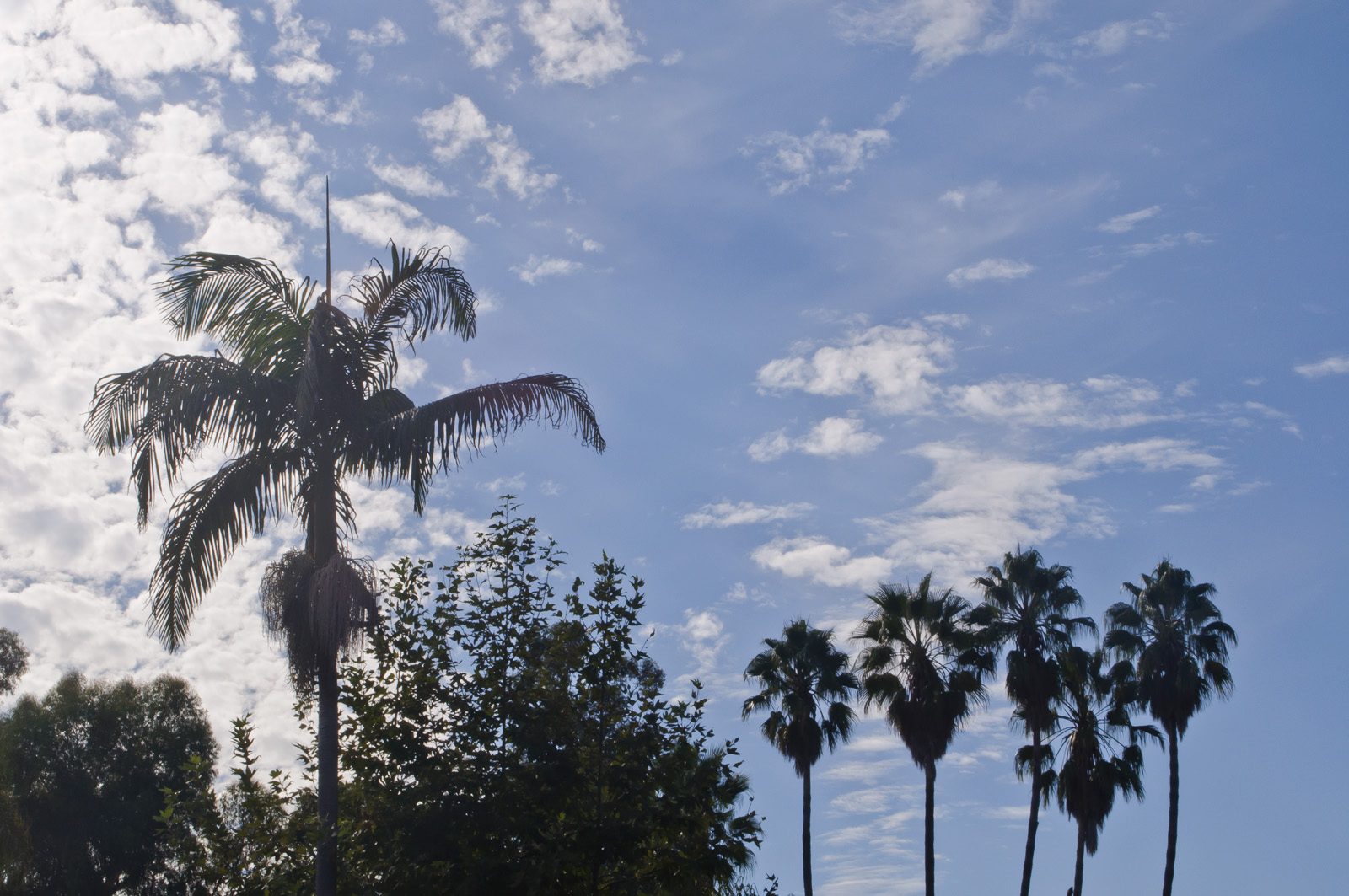
South Coast Botanic Garden on the Palos Verdes Peninsula. Photo: InSapphoWeTrust from Los Angeles, California, USA, CC BY-SA 2.0, via Wikimedia Commons
- The Promenade on the Peninsula: originally an enclosed regional mall anchored by May Company and Bullocks Wilshire, and today one of the two big shopping centers the city promotes.
- Peninsula Center: the city's other main shopping center, originally home to a Buffums department store, with the Palos Verdes Library District's Peninsula Center Library nearby.
- South Coast Botanic Garden: a public garden at 26300 Crenshaw Boulevard, open daily from 8 a.m. to 5 p.m.
- Bridle trails and parks: more than 25 miles of trails, plus Ernie Howlett Park and Chandler Park.
For the coast, residents drive to the bluffs and coves of Palos Verdes Estates and Rancho Palos Verdes. Torrance is just down the hill.
How Is the Commute from Rolling Hills Estates?
Rolling Hills Estates is about 14 miles from LAX and about 25 miles from downtown Los Angeles by car (Google Maps, shortest suggested route from City Hall). The Census Bureau puts residents' average commute at 27.2 minutes, shorter than in Palos Verdes Estates (31.9) or Rancho Palos Verdes (32.8).
There's no freeway or Metro rail on the Peninsula, so drivers take Hawthorne Boulevard, Crenshaw Boulevard or Palos Verdes Drive North down to Torrance and the 405 or the 110. The Palos Verdes Peninsula Transit Authority runs local buses.
What Should Buyers Know Before Buying in Rolling Hills Estates?
Buyers in Rolling Hills Estates should check land stability, fire zones, insurance, HOA rules and the real tax bill.
Land movement
Rolling Hills Estates had its own landslide on Peartree Lane on July 8, 2023, which destroyed several homes. It isn't part of the Portuguese Bend landslide in Rancho Palos Verdes, but it's a reminder that hillside lots on the Peninsula need a geotechnical review. Standard homeowners policies generally don't cover earth movement.
Fire hazard severity zones
California's State Fire Marshal released updated fire hazard severity zone maps for cities on March 24, 2025, and cities can add areas but can't remove them. Earlier hazard plans for Rolling Hills Estates mapped Very High Fire Hazard Severity Zones in the city, and in August 2026 the Peninsula cities announced federal approval of a shared hazard mitigation plan. Look up the exact address on the State Fire Marshal's map viewer.
Homeowners insurance
Get a quote during your inspection period. On September 18, 2026, the California Department of Insurance reported that State Farm and Allstate had filed to start writing new homeowners policies again, but said "these companies are not open for new business yet." The California FAIR Plan is the last resort, and it mainly covers fire.
HOA rules and taxes
Read the HOA's rules for your neighborhood before you remove contingencies, especially if you plan to add on or keep animals. Your property tax is the 1% base on your purchase price plus voter-approved bonds and assessments, and a supplemental bill arrives after closing. RHE has no city transfer tax. The LA County documentary transfer tax is $1.10 per $1,000.
Pros and Cons of Living in Rolling Hills Estates
Pros
- More than 25 miles of bridle trails and city-run riding rings
- The Peninsula's main shopping, dining and movie theater in town
- An A+ school district on Niche, with Palos Verdes Peninsula High School in the city
- A shorter average commute (27.2 minutes) than Palos Verdes Estates or Rancho Palos Verdes
Cons
- A median sale price around $2.3 million
- About 30 separate HOAs with different rules
- Fire hazard zones, hillside landslide risk and a hard insurance market
- No ocean frontage inside city limits
Who Is Rolling Hills Estates Best For?
Rolling Hills Estates is best for families who want Peninsula schools with easier errands, horse owners who want trails from their own street, and buyers who want a slightly shorter drive to Torrance and the 405. It's a good fit for people who want a rural look with shopping inside city limits. It's a weaker fit if you want to live on the coast or don't want HOA rules shaping what you can build.
Interested in Rolling Hills Estates? Search homes for sale, read our South Bay buyer's guide, or talk to our team. Already own on the Peninsula? Get a home value estimate.
This guide is general information, not legal, tax or insurance advice. Fire maps, HOA rules and insurer availability change, so confirm details for a specific property with the city, the HOA and a licensed insurance agent.
Frequently Asked Questions
Is Rolling Hills Estates the same as Rolling Hills?
No. Rolling Hills Estates and Rolling Hills are separate cities, both incorporated in 1957. Rolling Hills Estates is an open city with public streets and the Peninsula's main shopping district, while Rolling Hills is a smaller gated city with private roads.
Can you keep horses in Rolling Hills Estates?
Yes, on properties zoned and approved for it. The city promotes an equestrian lifestyle, runs public riding rings and the Peter Weber Equestrian Center for boarding, and has more than 25 miles of bridle trails. Check the lot's zoning and HOA rules before you buy.
How much does a home cost in Rolling Hills Estates?
Redfin reports a median sale price of about $2.3 million for the three months ending September 2026, up 12.3% from a year earlier. Prices range widely because the city has both condos near Peninsula Center and large horse properties.
What shopping is in Rolling Hills Estates?
Rolling Hills Estates has the Peninsula's main shopping district, including the Promenade on the Peninsula and Peninsula Center. The city describes a mile-long commercial district with open-air plazas, a movie theater and an ice rink.
What school district is Rolling Hills Estates in?
Rolling Hills Estates is in the Palos Verdes Peninsula Unified School District, which Niche grades A+ and ranks #3 of 465 California districts (checked October 2026). Palos Verdes Peninsula High School is located in the city.
Featured image photo: Clotee Allochuku, CC BY 2.0, via Wikimedia Commons, cropped and edited with added text.
or another way