
Categories
southbay neighborhood guidesPublished October 30, 2026
Living in San Pedro, CA: The 2026 Guide for Home Buyers

By Frank Kenny, REALTOR® (DRE #01250123) · Frank Kenny Real Estate Team, eXp Realty of Greater Los Angeles · Updated October 2026
San Pedro is a working harbor town with ocean bluffs, older homes and a strong local identity, and it is not a separate city: it is a community inside the City of Los Angeles. San Pedro was its own city until it consolidated with Los Angeles in 1909. Today that means LAUSD schools, LAPD and LA City services, LA City's transfer taxes (including the Measure ULA "mansion tax"), and LA's rent stabilization rules on many older rentals.
I've sold homes in the South Bay since 1998, and San Pedro is the place buyers often discover when they want an ocean view without a Palos Verdes price. Below are the facts, the neighborhoods, what homes cost, the schools, what there is to do, the commute, and the honest trade-offs of living next to the busiest container port in the Western Hemisphere.
San Pedro at a Glance
| Fact | San Pedro, Los Angeles |
|---|---|
| What it is | A community in the City of Los Angeles (separate city until 1909) |
| Population | About 85,000 in ZIPs 90731 and 90732 (ACS 2024 5-year estimates) |
| Size | 12.06 square miles (LA Times Mapping L.A.) |
| ZIP codes | 90731, 90732 |
| Neighbors | Rancho Palos Verdes, Lomita, Harbor City and Wilmington |
| School district | Los Angeles Unified (B+ overall on Niche, 2026); San Pedro High is rated A− on Niche |
| To LAX | About 21 miles by car |
| To Downtown LA | About 24 miles by car, via I-110 |
| Typical homes | Mid-century single-family homes (median year built 1965–1971), hillside view homes, duplexes and fourplexes, condos and apartments |
| Owner-occupied homes | About 44% (ACS 2024 5-year, both ZIPs combined) |
| Market snapshot | Typical home value about $841,000, flat over the past year (Zillow Home Value Index, September 2026) |
What Is It Like to Live in San Pedro?
Living in San Pedro feels like living in a small port town that happens to be part of the City of Los Angeles. The Port of Los Angeles covers 7,500 acres and 43 miles of waterfront, and it has been the No. 1 container port in the Western Hemisphere for 26 straight years, according to the Port. You see the cranes from many hillside streets, you hear the ship horns, and a lot of families here have a parent or grandparent who worked the docks.
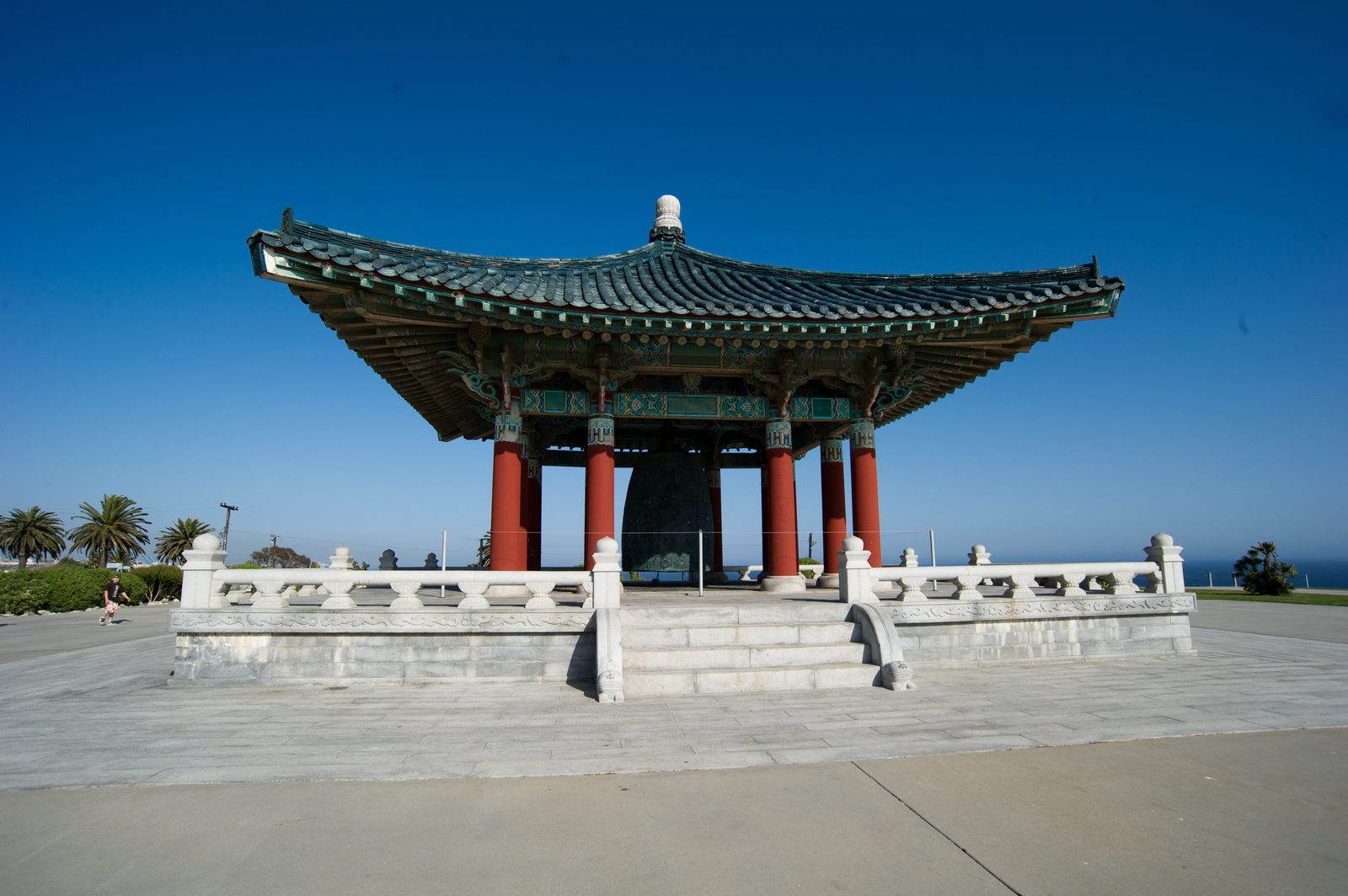
The Korean Bell of Friendship in Angels Gate Park, San Pedro. Photo: Bill Ebbesen, CC BY 2.5, via Wikimedia Commons
The other side of San Pedro is the coast. The southern end of town sits on bluffs above the Pacific, with Point Fermin Park, the 1874 Point Fermin Lighthouse and Cabrillo Beach. Downtown San Pedro has the restored Warner Grand Theatre and older storefronts, and the new West Harbor district is reshaping the waterfront along Harbor Boulevard.
The two ZIP codes feel different. ZIP 90731, which covers downtown, the harbor side and the older central neighborhoods, is mostly renters: only about 33% of households own their home. ZIP 90732, the hillier west and south side, is about 72% owner-occupied, according to the Census Bureau's 2024 five-year estimates.
What Are the Neighborhoods in San Pedro?
San Pedro's neighborhoods split roughly into the older streets near the harbor and the hillside and coastal areas to the west and south. Local names you'll hear most often:
- Vista del Oro: family streets between Western Avenue and Gaffey Street, roughly from 7th Street to 25th Street, around Averill Park.
- The Palisades: hillside streets on the west side of town, where many buyers start their search for a view.
- South Shores: hillside homes with ocean views, home to the South Shores Magnet for the Visual and Performing Arts elementary school.
- Point Fermin: the southern tip, near the lighthouse, Point Fermin Park and the coastal bluffs.
- Holy Trinity: central San Pedro around the Holy Trinity parish and school, between Gaffey Street and Western Avenue.
- Barton Hill: one of the older areas near the harbor, home to Barton Hill Elementary.
- Downtown and the waterfront: condos, apartments and older buildings near 6th Street, the Warner Grand and West Harbor.
What Kind of Homes Are in San Pedro, and What Do They Cost?
San Pedro homes are mostly mid-century single-family houses and small multi-unit buildings, with view homes on the hills. The median year built is 1965 in ZIP 90731 and 1971 in ZIP 90732, according to the Census Bureau's 2024 five-year estimates.
The housing mix depends on which side of town you're on:
- ZIP 90731: 42% of homes are single-family and 24% are in 2–4 unit buildings, so duplexes, triplexes and fourplexes are a big part of the market.
- ZIP 90732: 66% of homes are single-family, with more hillside houses and some condo complexes.
Market snapshot: Zillow's Home Value Index for San Pedro was about $841,000 in September 2026, essentially unchanged from September 2025. That figure blends single-family homes and condos. By ZIP code, Zillow put 90731 at about $822,000 and 90732 at about $875,000. A view home in the hills and a condo near downtown can be hundreds of thousands of dollars apart, so treat these as a starting point, not a price for any one house.
If you're curious about current listings, you can search homes for sale across the South Bay, including San Pedro.
What Are the Schools Like?
San Pedro's public schools are part of the Los Angeles Unified School District, which Niche grades B+ overall in its 2026 rankings. LAUSD is huge, with 408,026 students, so school quality varies a lot from campus to campus.
- San Pedro Senior High School (1610 S. Leland Street) has an A− overall grade on Niche, about 2,398 students and a 91% graduation rate.
- Port of Los Angeles High School is a charter high school in San Pedro.
- Mary Star of the Sea High School is a Catholic high school in town.
- Elementary options include Point Fermin Marine Science Magnet, South Shores Magnet for the Visual and Performing Arts and Barton Hill Elementary.
A tip: your school is set by LAUSD's attendance boundaries, not your ZIP code, and magnet schools have their own application process. Check the address in LAUSD's school locator before you write an offer.
What Is There to Do in San Pedro?
San Pedro has more to do along the water than almost anywhere else in the South Bay. The highlights:
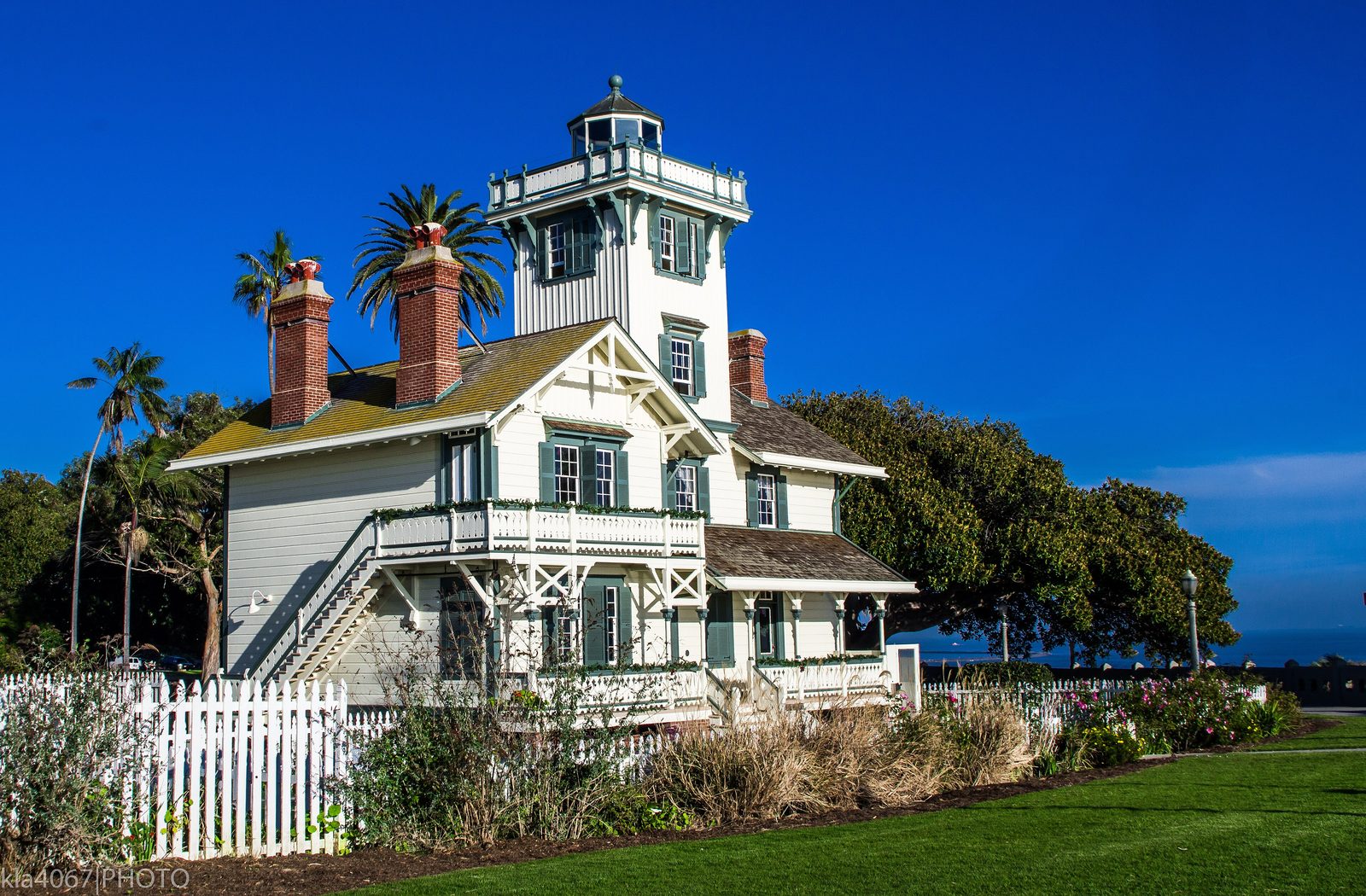
Point Fermin Lighthouse, built in 1874 at the entrance to the Port of Los Angeles. Photo: Ron Reiring from Inland Empire of Southern California, USA, CC BY 2.0, via Wikimedia Commons
- Cabrillo Beach: an inner beach inside the breakwater with calm water, and an outer beach with surf. The Cabrillo Marine Aquarium is right there.
- Point Fermin Park and Lighthouse: the lighthouse was built in 1874 and is now a museum. The park hosts Shakespeare by the Sea each summer.
- Korean Bell of Friendship: the bronze bell in Angels Gate Park, a gift to Los Angeles in 1976, with wide views of the ocean and the harbor entrance.
- Battleship USS Iowa Museum and the Los Angeles Maritime Museum on the waterfront.
- Warner Grand Theatre in downtown San Pedro.
What's open at West Harbor?
West Harbor is the Port's new 42-acre waterfront district along Harbor Boulevard, and as of October 2026 it is partly open. The promenade from Berth 84 Park to Berth 77 Park is open, along with the San Pedro Fish Market, Harbor Breeze Cruises and bike rentals. Its 6,200-seat amphitheater opened in summer 2026 as a World Cup fan zone and is now hosting concerts. More restaurants are still on the way, and a Ferris wheel is planned. If you're buying near downtown, it's worth walking the site to see what's open and what's still behind fences.
How Is the Commute from San Pedro?
San Pedro is at the very end of the line, which is great for quiet and hard on commutes. Interstate 110 (the Harbor Freeway) starts at Gaffey Street and runs north to Downtown LA, about 24 miles by car. LAX is about 21 miles away. The Vincent Thomas Bridge (State Route 47) connects San Pedro to Terminal Island and Long Beach.
There's no rail line in San Pedro. The closest Metro option is the J Line's Line 950 bus, which runs from San Pedro up the Harbor Freeway to Downtown LA and on to El Monte. Most residents drive, and traffic on the 110 at rush hour is the main complaint you'll hear.
What Should Buyers Know Before Buying in San Pedro?
The biggest things to know before buying in San Pedro are that LA City rules apply, the coastal bluffs can move, and air quality changes a lot from one side of town to the other. Here's the honest list.
LA City transfer tax and Measure ULA
Because San Pedro is in the City of Los Angeles, the city's real property transfer tax applies to every sale: a base rate of 0.45%. On top of that is the Measure ULA tax. According to the LA City Office of Finance, for sales closing after June 30, 2026:
- Over $5,400,000 and under $10,900,000: an extra 4% (4.45% total with the base tax).
- $10,900,000 or more: an extra 5.5% (5.95% total).
The ULA rate applies to the whole sale price, not just the amount over the line, and the thresholds are adjusted each July for inflation. With a typical San Pedro home value near $841,000, most home sales here are far below the threshold. Owners of larger apartment buildings or commercial property should run the numbers early.
Rent stabilization (RSO) on older rentals
San Pedro has a lot of duplexes and small apartment buildings, so this matters. LA's Rent Stabilization Ordinance generally covers rental units in buildings first built on or before October 1, 1978, including apartments, duplexes and rented condos, according to the LA Housing Department. A single-family house that is the only home on its lot is generally not covered. The allowed annual increase for RSO units is 3% through June 30, 2027. If you're buying an income property, confirm its RSO status and current rents before you remove contingencies.
Landslides and coastal bluffs
Parts of San Pedro's coast have a long landslide history. The Point Fermin area known as Sunken City began sliding in 1929. On November 20, 2011, about 420 feet of Paseo del Mar near White Point slid 53 feet toward the ocean, according to the city's Bureau of Engineering, and that stretch of road is still closed. If you're looking at a bluff-top or hillside home, read the Natural Hazard Disclosure, check the city's ZIMAS parcel report, and consider a geologist's review.
Air quality near the port
Air quality in San Pedro depends on how close you are to the port and the freeway. California's CalEnviroScreen 4.0 ranks every census tract in the state by pollution burden. In ZIP 90731, the middle tract ranks in the 70th percentile overall, with some tracts near the 99th. In the hillier ZIP 90732, the middle tract ranks in the 32nd percentile. Higher means more pollution burden, so the west and south side generally score better than the harbor side.
Property tax and insurance
Your property tax starts at the 1% base rate on your purchase price plus local voter-approved bonds, and you'll get a supplemental tax bill after closing. Check the exact rate for the address. For insurance, get a real quote during your inspection period, especially for older homes and hillside or coastal properties.
Pros and Cons of Living in San Pedro
Pros
- Ocean views and beach access at prices well below Palos Verdes.
- Cabrillo Beach, Point Fermin Park, the lighthouse and the Korean Bell.
- A real downtown and a waterfront that is getting a major makeover at West Harbor.
- San Pedro High has an A− on Niche.
- Lots of duplexes and fourplexes for buyers who want rental income or room for family.
Cons
- It's at the end of the freeway: about 24 miles to Downtown LA and no rail line.
- Port traffic, trucks and higher pollution scores on the harbor side.
- Landslide history along parts of the coast.
- Older housing stock: the median home was built in 1965 in ZIP 90731, so many need updates.
- LA City transfer taxes and rent rules add steps for investors.
Who Is San Pedro Best For?
San Pedro is a good fit for buyers who want the ocean nearby and a strong small-town feel, and who don't commute to the Westside every day. It works well for:
- Port, maritime and Harbor-area workers who want a short commute.
- Buyers priced out of Palos Verdes or the Beach Cities who still want views.
- Small investors looking at older duplexes and fourplexes, as long as they understand the RSO.
- People who like walking to a beach, a park or a harbor-front restaurant.
Thinking about San Pedro? Start with our guide to buying a home in the South Bay, or talk to our team about specific streets. If you already own here, get a free home value estimate before you decide what's next.
This guide is general information, not tax, legal or insurance advice. Transfer tax thresholds, rent rules and insurance availability change. Confirm current figures with the LA City Office of Finance, the LA Housing Department, and your own tax and insurance professionals.
Frequently Asked Questions
Is San Pedro its own city?
No. San Pedro is a community inside the City of Los Angeles; it consolidated with Los Angeles in 1909. Residents are served by LAUSD schools, the LAPD and other LA City services, and LA City taxes and rent rules apply.
How much does a home cost in San Pedro, CA?
Zillow's Home Value Index for San Pedro was about $841,000 in September 2026, roughly the same as a year earlier. That figure includes single-family homes and condos, so view homes in the hills usually cost more and downtown condos usually cost less.
Does the LA "mansion tax" apply in San Pedro?
Yes, because San Pedro is part of the City of Los Angeles. For sales closing after June 30, 2026, Measure ULA adds 4% on sales over $5.4 million and under $10.9 million, and 5.5% at $10.9 million or more, on top of the city's 0.45% base transfer tax.
What high school do San Pedro students attend?
Most public high school students attend San Pedro Senior High School, which Niche rates A− overall. Port of Los Angeles High School (charter) and Mary Star of the Sea High School (Catholic) are other options in town.
Is San Pedro rent controlled?
Many older rentals are. LA's Rent Stabilization Ordinance generally covers units in buildings built on or before October 1, 1978, and limits annual increases to 3% through June 30, 2027. A single-family home that is the only home on its lot is generally not covered.
Is West Harbor open in San Pedro?
Partly. As of October 2026, West Harbor's promenade, the San Pedro Fish Market, harbor cruises and a 6,200-seat amphitheater are open, and more restaurants are still opening in phases.
Featured image photo: Regular Daddy, CC BY-SA 3.0, via Wikimedia Commons, cropped and edited with added text.
or another way