Categories
southbay neighborhood guidesPublished October 30, 2026
Living in Gardena, CA: Neighborhoods, Homes, Schools and What to Know

By Frank Kenny, REALTOR® (DRE #01250123) · Frank Kenny Real Estate Team, eXp Realty of Greater Los Angeles · Updated October 2026
Gardena is a compact, working South Bay city of about 61,000 people, known for its deep Japanese American roots, its card club history and its spot between the 110, 405 and 91 freeways, with home prices that run below most of its beach-side neighbors. It covers less than 6 square miles, and much of what makes it special fits along a few blocks of Western Avenue.
I've sold homes in the South Bay since 1998, and Gardena is one of the places I point buyers to when they want to stay close to Torrance and the beach cities but need a lower price. Below is an honest look at the neighborhoods, homes, schools, food, commute and the details buyers should check before writing an offer.
Gardena at a Glance
| Fact | Gardena, CA |
|---|---|
| Incorporated | September 11, 1930 |
| Population | 61,027 (2020 Census) |
| Area | 5.86 square miles |
| ZIP codes | 90247, 90248, 90249 (some of these addresses are outside city limits) |
| School district | Los Angeles Unified (LAUSD); Niche district grade B+ (checked October 2026) |
| Distance to LAX | About 7 miles straight-line |
| Distance to Downtown LA | About 12 miles straight-line |
| Freeways | I-110 (Harbor), I-405 (San Diego), SR-91 (Gardena/Artesia) |
| Owner-occupied homes | 48.9% (Census ACS 2019–2023) |
| Home types | 1940s–60s ranch homes, apartments, newer townhomes |
| Market snapshot | Zillow Home Value Index about $780,000, up 2.2% year over year (Zillow, data through September 2026) |
What Is It Like to Live in Gardena?
Living in Gardena feels like living in a busy, practical, mid-century suburb where Japanese American culture is still part of daily life. You see it in the mochi shops and noodle houses on Western Avenue, in the Saturday Japanese school at the Gardena Valley Japanese Cultural Institute, and in the summer Obon festival at Gardena Buddhist Church.
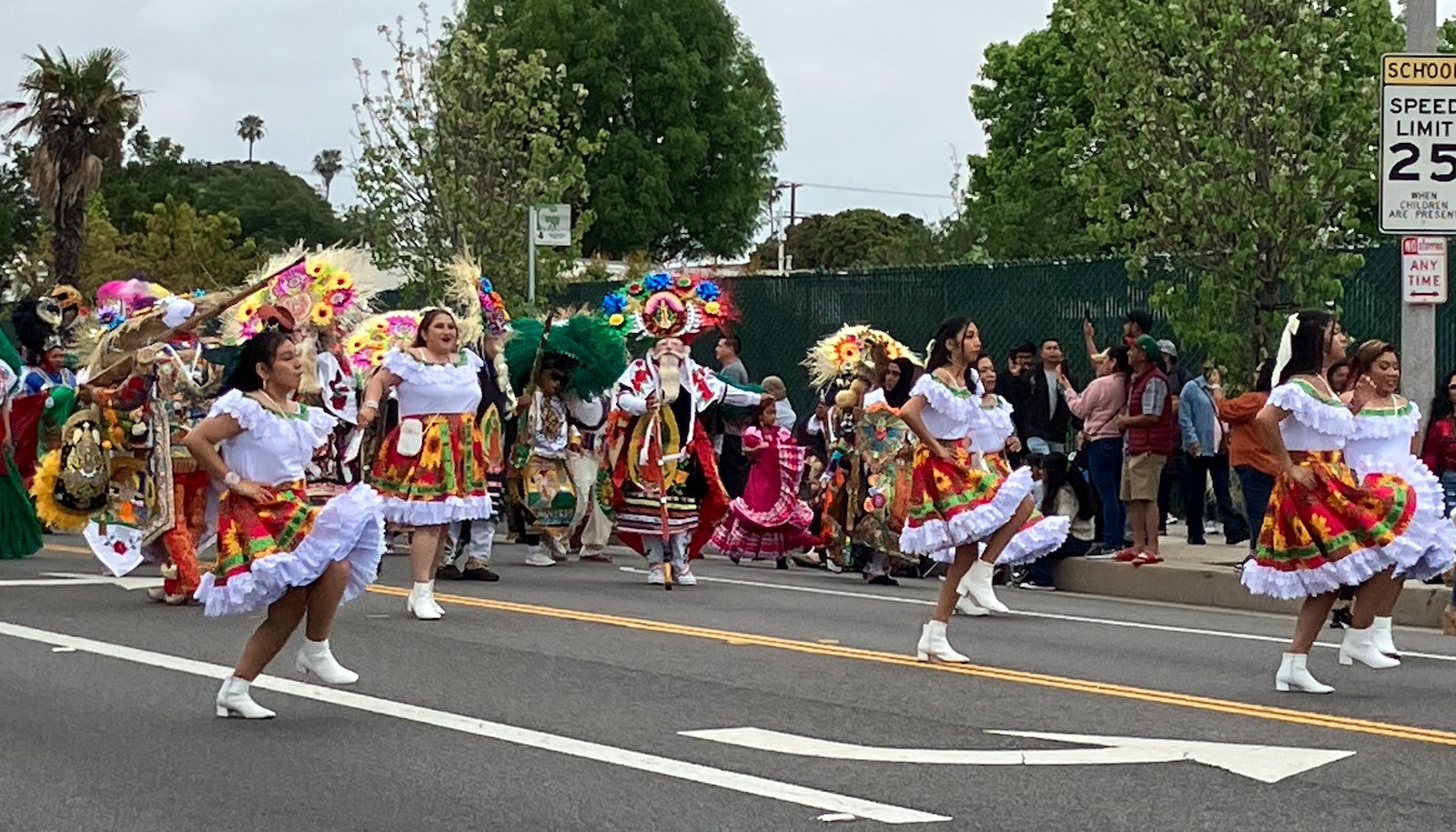
Dancers in a 2024 street parade in Gardena. Photo: Penny Richards, CC0, via Wikimedia Commons
The city's roots go back to farming. Moneta and Strawberry Park were Japanese American farm communities before World War II, and they became part of Gardena when it incorporated in 1930. The area was nicknamed "Berryland" for its strawberry fields. The Moneta Japanese Institute opened in 1911 and a Japanese language school followed in 1916. In 1942, Gardena's Japanese American residents were forced into incarceration camps. Many families came back, and in 1966 Kiyoto Ken Nakaoka became the first Nisei elected to the city council. He became mayor in 1972, and the city's Nakaoka Community Center on 162nd Street carries his name.
Gardena's other well-known story is cards. Ernie Primm opened the city's first card club in 1936, and from then until 1980 Gardena held a local monopoly on legal cardrooms in Los Angeles County. By the 1960s, six clubs were open, including the Normandie, the Monterey, the Rainbow, the Horseshoe, the Gardena and the El Dorado. Card club taxes paid for nearly a third of the city budget. Two cardrooms remain today: the Hustler Casino on Redondo Beach Boulevard, open since 2000 in the old El Dorado, and Larry Flynt's Lucky Lady Casino on Rosecrans Avenue, which replaced the Normandie after a 2016 sale.
What Are the Neighborhoods in Gardena?
Gardena's neighborhoods are small and close together, and most buyers shop by street rather than by named area. These are the names you'll hear most:
- Moneta: the historic Japanese American farm settlement. The Gardena Valley Japanese Cultural Institute on 162nd Street carries on the work of the Moneta Japanese Institute, founded in 1911.
- Strawberry Park: another pre-war farming community folded into the city in 1930, a reminder of the "Berryland" years.
- Central Gardena: a mix of small apartment buildings and single-family homes, many built between 1940 and 1969, with more renters than owners.
- Hermosillo: one of the city's named neighborhoods, listed alongside Moneta and Strawberry Park.
- North Gardena near Rowley Park: residential streets around Rowley Park, an 18-acre park on Van Ness Avenue.
- East side near the 110: streets close to the Harbor Freeway and the Harbor Gateway Transit Center. Check city limits carefully here, because some "Gardena" addresses are actually in the City of Los Angeles.
What Kind of Homes Are in Gardena, and What Do They Cost?
Most Gardena homes are modest mid-century houses and apartments, and the typical home value sits around $780,000. According to NeighborhoodScout, about 56% of the city's homes were built from the 1940s through the 1960s, mostly small ranch and cape-style houses built for a growing middle class. Point2Homes data puts the median year built at 1964. About 44% of units are detached single-family homes, and roughly 20% are in buildings with five or more units. About 10% were built in 2000 or later.
Gardena is a renter-majority city. Only 48.9% of homes are owner-occupied, according to the Census Bureau's 2019–2023 American Community Survey. For buyers, that means you'll often see owner-occupied houses next to rentals and small apartment buildings on the same block.
On price, Zillow's Home Value Index for Gardena was $780,233 with data through September 30, 2026, up 2.2% from a year earlier. That's a typical value, not a sale price, and individual homes range widely by size, condition and street. If you already own here, our home value tool is a quick place to start.
What Are the Schools Like?
Gardena's public schools are run by the Los Angeles Unified School District, which covers the entire city. Niche gives LAUSD an overall district grade of B+ (checked October 2026). LAUSD is a very large district, so quality varies school by school, and it's worth looking up the specific schools tied to an address.
- High school: Gardena High School, at 1301 W. 182nd Street, is technically in the Harbor Gateway neighborhood of Los Angeles, just outside city limits. Its attendance area includes Gardena, parts of Carson and parts of Harbor Gateway.
- Middle school: Peary Middle School is inside Gardena. Some areas can choose between Peary and Henry Clay Middle School.
- Private and parochial: Junípero Serra High School, Maria Regina Catholic School and St. Anthony of Padua School.
LAUSD also runs magnet and choice programs open by application. Confirm the assigned schools for any address with LAUSD's school finder before you rely on a listing description.
What Is There to Do in Gardena?
The biggest draw in Gardena is the food, especially Japanese and Japanese American restaurants and markets along Western Avenue and Redondo Beach Boulevard. In a September 2025 story, the Los Angeles Times described Gardena and Torrance as home to the biggest suburban Japanese community in the U.S.
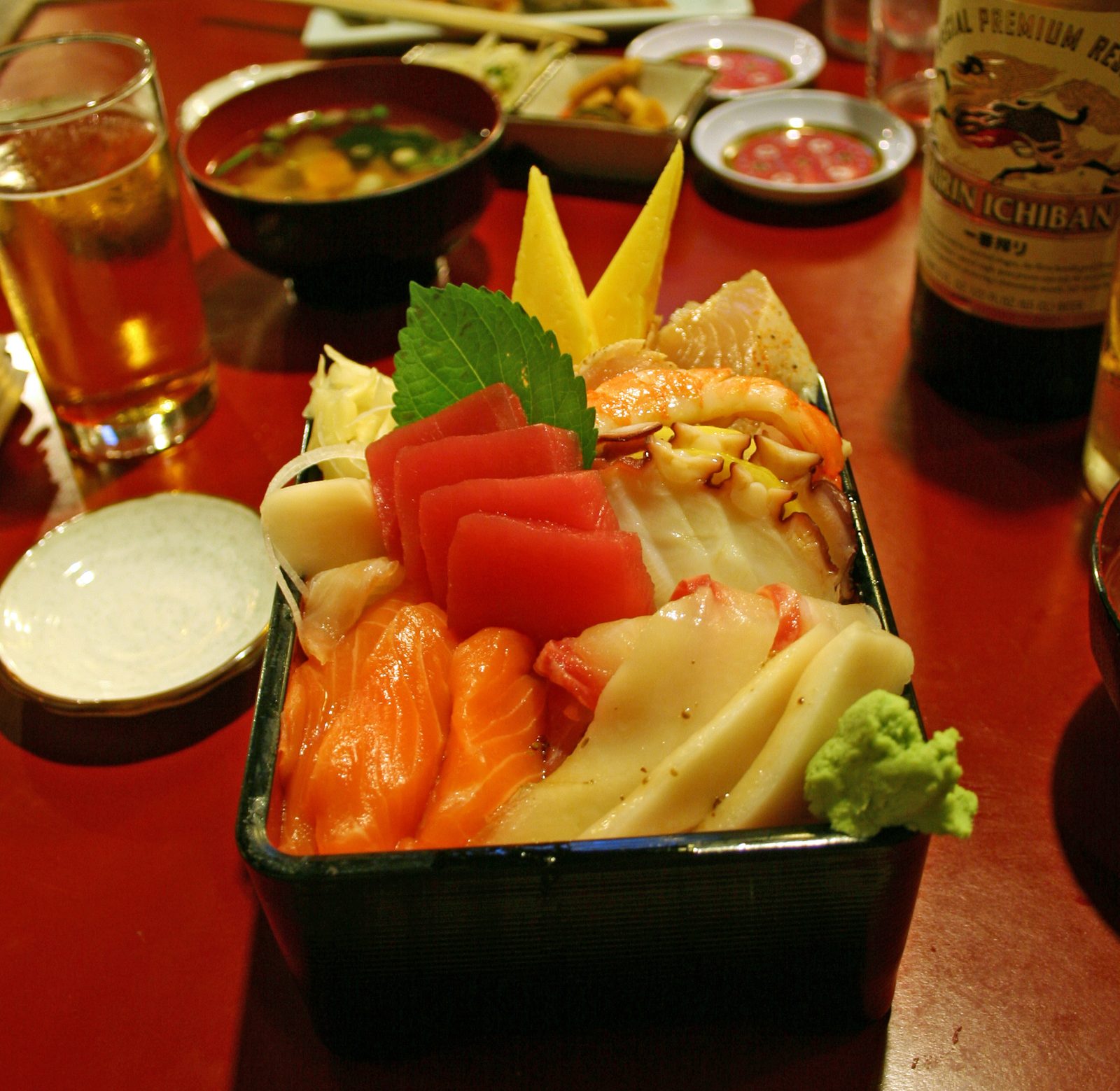
Chirashi sushi at a Japanese restaurant in Gardena. Photo: Marshall Astor, CC BY-SA 2.0, via Wikimedia Commons
- Mochi and tofu: Sakura-Ya and Chikara Mochi on Western Avenue, plus Meiji Tofu, all named by the LA Times.
- Noodles: Otafuku Noodle House at 16525 S. Western Ave. for Tokyo-style soba, Sanuki No Sato at 18206 S. Western Ave. for udon (open since 1989), and Jidaiya at 18537 S. Western Ave. for ramen.
- Local comfort food: the Gardena Bowl Coffee Shop, inside the bowling alley at 15707 Vermont Ave., serves Japanese American and Hawaiian plates like loco moco and Portuguese sausage.
- Groceries: Tokyo Central in the Pacific Square center on Redondo Beach Boulevard, which took over the former Marukai space in 2015.
For annual events, the Gardena Buddhist Church Obon Festival at 1517 W. 166th Street is one of the largest Obon events in Southern California. The 2026 festival on August 1–2 marked the temple's 100th anniversary, with taiko, food booths and Bon Odori dancing in the street. The Gardena Valley Japanese Cultural Institute Matsuri each summer is the institute's largest community event.
For parks, Rowley Park on Van Ness Avenue covers about 18 acres with tennis courts and sports fields. Mas Fukai Park on Brighton Avenue is named for longtime community leader Mas Fukai and got $2 million in the 2023 state budget to restore its teen center. The Gardena Willows Wetland Preserve, a 9.4-acre marsh in the southeast corner of the city, is a rare patch of native habitat in the middle of the South Bay.
Beaches aren't in Gardena, but Torrance Beach and the Redondo Beach pier are a short drive west, and Del Amo Fashion Center in Torrance is close by.
How Is the Commute?
Gardena's commute is its strongest selling point, because the city sits between three freeways. It's known as the "Freeway City" for good reason. The Harbor Freeway (I-110) runs along the city's east edge, the San Diego Freeway (I-405) is just to the south, and the Gardena Freeway (SR-91) meets the 110 near 182nd Street. Straight-line, Gardena is about 7 miles from LAX and about 12 miles from Downtown LA, so many commutes are short on paper. Rush-hour traffic on the 110 and 405 is another matter.
- Metro J Line: the bus rapid transit line runs down the middle of the 110. The Rosecrans station and the Harbor Gateway Transit Center (182nd Street, at the 110 and 91 interchange, with a 980-space park-and-ride lot) both serve Gardena-area riders headed to Downtown LA.
- GTrans: the city runs its own bus system, formerly called Gardena Municipal Bus Lines.
The biggest employers in the city include UPS, Gardena Memorial Hospital and Nissin Foods, and the card clubs still employ hundreds of people. The Hustler Casino alone lists about 465 workers.
What Should Buyers Know Before Buying in Gardena?
The most important thing to check in Gardena is whether the address is actually inside the city. A "Gardena" mailing address can belong to three different places:
- The City of Gardena, with its own police, bus system and city services.
- Unincorporated LA County, such as Alondra Park to the west or Athens to the north. County services apply.
- The City of Los Angeles, in the Harbor Gateway strip to the east and south. Those parcels follow LA city rules, including LA's Measure ULA transfer tax on high-end sales (4% above $5.4 million and 5.5% above $10.9 million for the 2026–27 fiscal year). Few Gardena-area homes reach that price, but the jurisdiction difference still affects permits, services and rules.
Other things to budget and check:
- Property tax: plan on the 1% base rate plus local voter-approved bonds, based on your purchase price, not the seller's bill. Look up the exact rate for the address on the LA County Treasurer and Tax Collector website.
- Age of the home: with a median build year of 1964, many houses need updated plumbing, electrical, sewer lines or roofs. Get a sewer line inspection.
- Neighbors: because Gardena has many apartments, light industrial areas and two cardrooms, walk the block at night and on a weekend before you buy.
- Insurance: get a homeowners insurance quote during your inspection period, before you remove contingencies.
- Newer townhomes: read the HOA budget and reserve study, and ask whether any special assessments apply.
Pros and Cons of Living in Gardena
Pros
- Typical home values below most of the South Bay, according to Zillow.
- A central location between the 110, 405 and 91, with J Line access to Downtown LA.
- One of the strongest Japanese and Japanese American food and cultural scenes in the country.
- Long-running community traditions, from Obon to the cultural institute's Matsuri.
- A small city (under 6 square miles) where most errands are a short drive away.
Cons
- Mostly older housing that often needs updating.
- A majority of homes are rentals, so blocks can feel mixed.
- LAUSD schools vary widely, and the main public high school sits just outside the city.
- Freeway noise and traffic near the 110, 405 and 91.
- Confusing city lines: a Gardena address may be in LA County or the City of LA.
Who Is Gardena Best For?
Gardena is best for buyers who want a central South Bay location at a lower price than Torrance or the beach cities. It works well for first-time buyers, commuters who split time between the South Bay and Downtown LA, and anyone who cares more about great neighborhood food and an easy commute than a big lot or an ocean view. It also suits families with Japanese American roots in the area who want to stay close to the churches, schools and community groups their families built.
If you need top-ranked public schools as a must, compare specific LAUSD schools carefully before you choose a street.
Thinking about Gardena? Search homes for sale, read our South Bay buyer's guide, or talk to our team about which streets fit your budget. If you're comparing Gardena with its neighbor to the southwest, our North Torrance neighborhood guide is a good next read.
This guide is general information, not tax, legal or insurance advice. Tax rates, transfer taxes and insurance availability change, so confirm the details for a specific property with the appropriate professional.
Frequently Asked Questions
Is Gardena, CA a good place to live?
Gardena is a good fit for buyers who want a central South Bay location, a short freeway commute and lower prices than Torrance or the beach cities. It has a strong Japanese American community and food scene. Most homes are older, and a majority are rentals, so it's worth comparing blocks carefully.
How much does a house cost in Gardena, CA?
Zillow's Home Value Index for Gardena was about $780,000 with data through September 2026, up 2.2% from a year earlier. That's a typical value across all home types. Single-family houses, condos and townhomes can sell well above or below it.
What school district is Gardena in?
All of Gardena is in the Los Angeles Unified School District, which Niche grades B+ overall (checked October 2026). The main public high school, Gardena High School, sits just outside city limits in Harbor Gateway. Peary Middle School is inside the city.
Why is Gardena known for card clubs?
Gardena licensed card clubs starting in the late 1930s and held a local monopoly on legal cardrooms in Los Angeles County until 1980. Card club taxes once paid for nearly a third of the city budget. Two cardrooms still operate: the Hustler Casino and Larry Flynt's Lucky Lady Casino.
Why does Gardena have so many Japanese restaurants?
Japanese American families farmed the Gardena area, including Moneta and Strawberry Park, before World War II, and many returned after the wartime incarceration. Community anchors like the Gardena Valley Japanese Cultural Institute and Gardena Buddhist Church, founded in 1926, are still active. Today Western Avenue is lined with Japanese noodle shops, mochi makers and markets.
Is a Gardena address always in the City of Gardena?
No. ZIP codes 90247, 90248 and 90249 also cover unincorporated areas like Alondra Park and parts of the City of Los Angeles in Harbor Gateway. Check the parcel's jurisdiction with the LA County Assessor before you buy, because it affects services, rules and some taxes.
Featured image photo: Jengod, CC BY-SA 4.0, via Wikimedia Commons, cropped and edited with added text.
or another way