Categories
southbay neighborhood guidesPublished October 30, 2026
Living in Lomita, CA: The Complete Guide

By Frank Kenny, REALTOR® (DRE #01250123) · Frank Kenny Real Estate Team, eXp Realty of Greater Los Angeles · Updated October 2026
Lomita is a small, low-key city of about 21,000 people tucked between Torrance and the Palos Verdes Peninsula, where homes generally cost less than in Torrance and the schools are part of Los Angeles Unified. It covers less than 2 square miles, calls itself "The Friendly City," and feels more like a neighborhood than a city.
I've sold homes in the South Bay since 1998, and Lomita comes up often with buyers who want the South Bay at a lower price. Below are the facts, the main areas of town, what homes cost, the schools, things to do, the commute, and the honest trade-offs to check before you buy.
Lomita at a Glance
| Fact | Lomita, CA |
|---|---|
| Population | 20,921 (2020 Census) |
| Size | 1.91 square miles |
| Incorporated | June 30, 1964 |
| ZIP code | 90717 |
| Neighbors | Torrance, Rolling Hills Estates, Rancho Palos Verdes and Harbor City (City of Los Angeles) |
| School district | Los Angeles Unified (B+ overall on Niche, 2026); high school is Narbonne in Harbor City |
| To LAX | About 14 miles by car |
| To Downtown LA | About 20–25 miles |
| Typical homes | 1950s–60s single-family homes, condos, townhomes and small apartment buildings |
| Owner-occupied homes | 44.6% (2020 Census): most households rent |
| Market snapshot | Typical home value about $904,000, up about 1.2% in a year (Zillow Home Value Index, September 2026) |
What Is It Like to Live in Lomita?
Living in Lomita feels like small-town South Bay: a compact grid of older homes and apartments, a city hall on Narbonne Avenue, a railroad museum, and neighborhood restaurants along Pacific Coast Highway and Lomita Boulevard. The 2020 Census counted 20,921 residents on just 1.91 square miles.
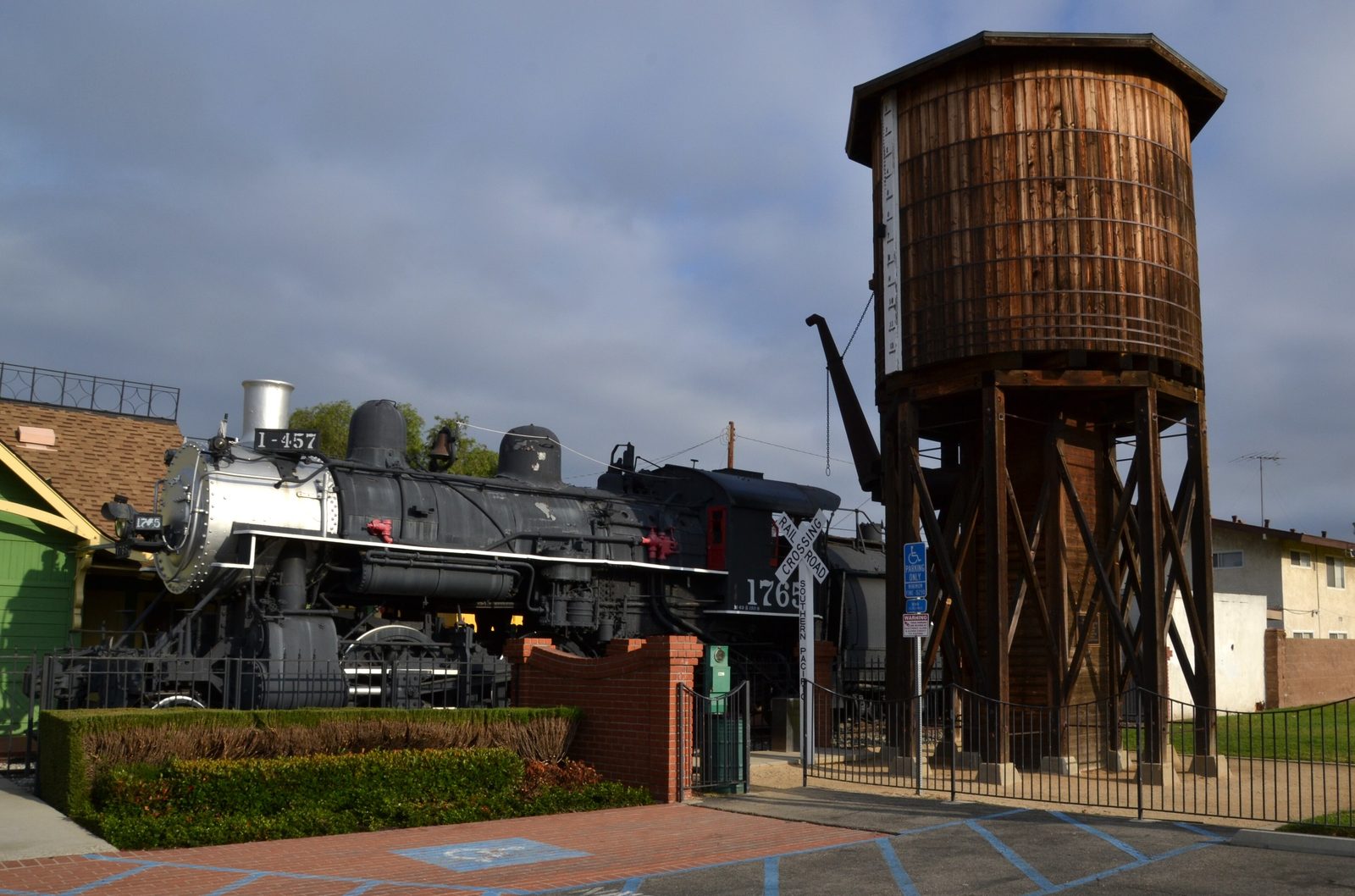
A Southern Pacific steam locomotive on display at the Lomita Railroad Museum. Photo: Tracie Hall, CC BY-SA 2.0, via Wikimedia Commons
Lomita was once much larger. The area covered about 7 square miles before neighboring cities annexed parts of it, and residents voted to incorporate on June 30, 1964, in part to stop further annexation. Even the land under Torrance's airport was once known as Lomita Fields.
The city stays small by contracting for big services. The Los Angeles County Sheriff's Department polices Lomita from its Lomita Station at 26123 S. Narbonne Avenue, which also serves Rancho Palos Verdes, Rolling Hills and Rolling Hills Estates. The LA County Fire Department provides fire protection. One thing Lomita does run itself is its water system, which buys most of its water from the regional supplier.
Like Torrance next door, Lomita has strong Japanese ties. It has been a sister city of Takaishi, Japan, since 1981, and the Takaishi Japanese Garden sits next to City Hall. You'll find Japanese restaurants here, too, such as Yakitori Nishi on Pacific Coast Highway and Gaja Moc, an okonomiyaki café on Lomita Boulevard.
What Are the Neighborhoods in Lomita?
Lomita is too small for formal neighborhoods, so areas are usually described by their main streets. These are the main ones:
- City Center: the blocks around City Hall at 24300 Narbonne Avenue, with smaller homes and small apartment buildings close to shops and city services.
- Narbonne Avenue corridor: Lomita's main street between Lomita Boulevard and Pacific Coast Highway, zoned for neighborhood shops and mixed use next to single-family streets.
- Pennsylvania Avenue and Lomita Boulevard: mostly single-family homes and small apartment complexes, near Hathaway Park.
- Lomita Park area: the streets around the city's main park on Eshelman Avenue.
- Harbor Hills (south Lomita): the southern part of town that borders the Palos Verdes Peninsula, with single-family homes, condos and small apartment complexes.
- Pacific Coast Highway corridor: the busy commercial strip with restaurants, services and apartments on either side.
One local quirk: some homes right next to Lomita carry a Harbor City (90710) address and are inside the City of Los Angeles. That affects taxes and city services, so check which city a home is actually in.
What Kind of Homes Are in Lomita, and What Do They Cost?
Lomita's homes are mostly modest 1950s and 1960s houses mixed with condos, townhomes and apartments, and prices generally run below Torrance. According to Zillow's Home Value Index, the typical Lomita home was worth about $904,000 in September 2026, up about 1.2% from a year earlier. The Census Bureau's 2019–2023 estimates put the median value of owner-occupied homes at $792,100.
- Single-family homes: about half of Lomita's housing units are detached houses, and property records put the median year built in the early 1960s. Many are small one-story homes on modest lots.
- Condos and townhomes: a common entry point for first-time buyers who want the South Bay.
- Apartments: Lomita is a renter-majority city. In the 2020 Census, 55.4% of households rented, so you'll see small apartment buildings on many streets, and some buyers look at duplexes and small multi-unit properties.
A word on price data: very few homes sell in Lomita each month, often only 5 to 13. That makes monthly median prices jump around. Redfin, for example, showed a median of $910,000 in October 2025 and $707,000 the next month. A home value index or a three-month average is a better guide than any single month. To see what's for sale now, search current listings.
Lomita is also planning for more housing. Its state-required housing plan calls for more than 829 new units, with Narbonne Avenue and Lomita Boulevard named as places for mixed-use and higher-density buildings.
What Are the Schools Like in Lomita?
Lomita's public schools are part of Los Angeles Unified School District, not Torrance Unified, even though Lomita borders Torrance. Niche gives LAUSD a B+ overall grade in its 2026 profile.
- Elementary: Eshelman Avenue Elementary, and Lomita Math/Science Magnet, which takes neighborhood students for kindergarten only; grades 1–5 are by magnet application.
- Middle: Alexander Fleming Middle School on Walnut Street in Lomita.
- High: Narbonne High School, at 24300 S. Western Avenue in Harbor City, which serves Lomita and Harbor City.
On Niche, Narbonne is graded B+, Fleming B and Eshelman Avenue B−. LAUSD also runs magnet and choice programs across the South Bay, so families have options beyond their assigned school. The private Nishiyamato Academy of California, a Japanese elementary and junior high school, is also in Lomita.
The big buyer mistake is assuming a home a few blocks from Torrance is in Torrance Unified. If the home is in Lomita, it's LAUSD. Always confirm the school for the exact address with the district.
What Is There to Do in Lomita?
Lomita's fun is small-scale and local: a railroad museum, neighborhood parks, city events and a strong food scene. For the beach, the mall or hiking, you're a short drive from Torrance and the Palos Verdes Peninsula.
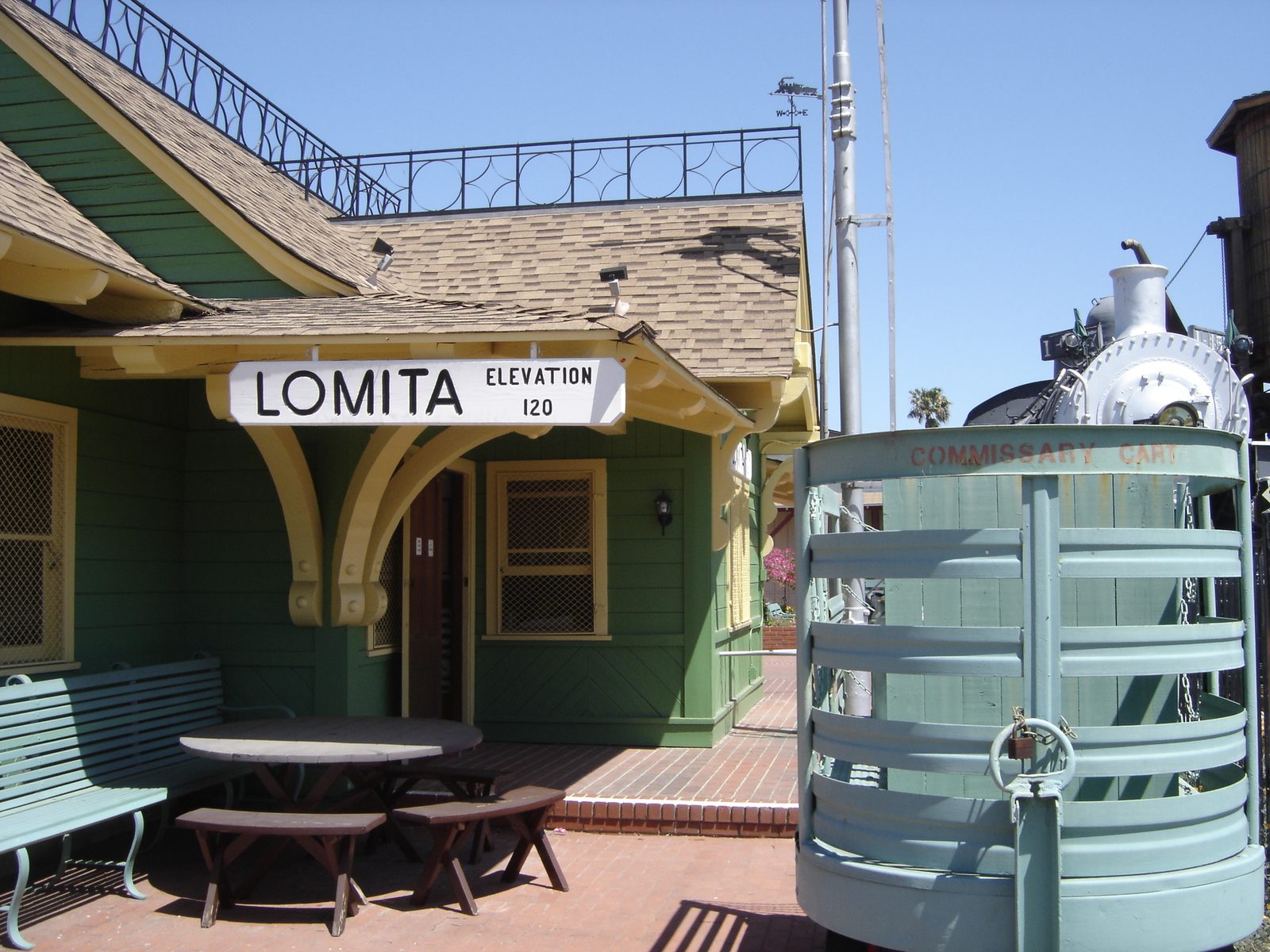
The Lomita Railroad Museum. Photo: Wikimedia Commons user “Lomita”, CC BY-SA 3.0, via Wikimedia Commons
- Lomita Railroad Museum: at 2137 W. 250th Street, opened in 1966, with a 1901 Baldwin steam locomotive, cabooses and a replica water tower. It's open Friday through Sunday, 10 a.m. to 5 p.m.
- Lomita Park: the main park, just over 7 acres on Eshelman Avenue, with the Tom Rico Center gym, a softball diamond, tennis and pickleball courts, play areas and picnic shelters.
- Small parks: Hathaway Park on Pennsylvania Avenue, Teuchert Park (dedicated in 2017), Veterans Park on Walnut Street, and Irene Lewis Park next to the railroad museum.
- Takaishi Japanese Garden: a walking path at City Hall, dedicated in 1986 to Lomita's sister city.
- City events: Halloween in the Park at Lomita Park, a haunted walk-through at the railroad museum, a Veterans Day ceremony at Veterans Park, and the holiday tree lighting in front of City Hall.
- Food: Yakitori Nishi, Gaja Moc and Kotosh, a Peruvian-Japanese restaurant on Lomita Boulevard, plus plenty of neighborhood spots along PCH.
How Is the Commute from Lomita?
Lomita is a driving commute, with LAX about 14 miles away and Downtown Los Angeles about 20–25 miles away. The main routes are Pacific Coast Highway, Lomita Boulevard, Narbonne Avenue and Western Avenue, and the 110 Freeway is just to the east.
- To LAX: about 14 miles by car, usually via Crenshaw Boulevard.
- To Downtown LA: the 110 Freeway north. Rush-hour times vary a lot.
- Transit: the Metro J Line, a bus line that runs on the Harbor Freeway, stops at the Pacific Coast Highway station near Harbor City and continues to Downtown LA.
- Local jobs: Torrance's hospitals, American Honda and the aerospace companies around Zamperini Field are all close by.
What Should Buyers Know Before Buying in Lomita?
Before buying in Lomita, check five things: which city the home is really in, the schools, airport noise, insurance and hazard maps, and the property tax.
Lomita vs. Harbor City: check the city line
Some homes that feel like Lomita are actually in Harbor City, which is part of the City of Los Angeles. That matters because LA's Measure ULA transfer tax applies only inside the City of LA. From July 1, 2026, it's 4% on sales above $5.4 million and 5.5% at $10.9 million or more, so it rarely touches this price range, but city services and rules differ too. Lomita isn't on the county's list of cities with special transfer-tax rates, so the county's $1.10 per $1,000 applies.
Property tax
Under Prop 13, your tax starts at 1% of your purchase price plus voter-approved bonds. According to the LA County Auditor-Controller, the total stays under 1.25% in most of the county. Budget on your price, not the seller's tax bill, and expect a supplemental bill after closing.
Airport noise
Torrance's airport, Zamperini Field, is nearby, and its traffic affects Lomita residents. The City of Lomita has worked with Torrance on noise complaints, and Torrance has banned touch-and-go landings. Check the City of Torrance's Noise Lab portal for flight tracks before you make an offer.
Insurance and fire hazard maps
Lomita received the State Fire Marshal's revised fire hazard map in March 2025 and scheduled a council hearing to adopt it on July 1, 2025. Check the map for your address. California's insurance market is also tight: State Farm stopped taking new homeowners applications in 2023. Get a real quote during your inspection period.
Older homes and water
With a median year built in the early 1960s, many Lomita homes may still have original plumbing, electrical or sewer lines. Budget for a sewer-line camera inspection. Lomita runs its own water utility, so ask the city about water rates for the specific address.
Pros and Cons of Living in Lomita
Pros
- Prices generally below Torrance and the beach cities
- Close to Torrance jobs, Palos Verdes hiking and the beach
- Small-town feel, with a city hall, railroad museum and community events close to home
- A strong local food scene, especially Japanese restaurants
Cons
- LAUSD schools, which grade lower on Niche than Torrance Unified
- Airport noise on some streets
- Busy corridors like PCH, and a high share of rentals
- Older housing stock that often needs updating
Who Is Lomita Best For?
Lomita is best for first-time buyers, downsizers and investors who want a South Bay address near Torrance and the Palos Verdes Peninsula at a lower price. It also suits families comfortable with LAUSD or planning to use magnet or private schools. If Torrance Unified is a must, look across the line in Torrance instead, and compare prices block by block.
Thinking about Lomita? Read our guide to buying a home in the South Bay, or talk with our team about the streets you're considering. If you already own in Lomita, get a starting estimate with our home value tool.
This article is general information, not tax, insurance or legal advice. Confirm tax rates, insurance, hazard zones, city limits and school boundaries for the specific address.
Frequently Asked Questions
Is Lomita, CA a good place to live?
For many buyers, yes. Lomita is a small South Bay city of about 21,000 people with a quiet, small-town feel, typical home values around $904,000 as of September 2026, and easy access to Torrance and the Palos Verdes Peninsula. The trade-offs are LAUSD schools, older homes and airport noise on some streets.
What school district is Lomita in?
Lomita is in the Los Angeles Unified School District, not Torrance Unified. Lomita students are generally assigned to Eshelman Avenue Elementary, Fleming Middle School and Narbonne High School in Harbor City. Confirm the assigned school for each address with LAUSD.
Is Lomita part of Torrance or Los Angeles?
Neither. Lomita has been its own city since June 30, 1964, with the ZIP code 90717. It borders Torrance and Harbor City, which is part of the City of Los Angeles, so check which city a home near the edges is actually in.
Is Lomita cheaper than Torrance?
Generally, yes. Zillow's Home Value Index put the typical Lomita home at about $904,000 in September 2026, compared with about $1.10 million in Torrance in August 2026. Home types and sizes differ, so compare similar homes, not citywide averages.
Does the mansion tax apply in Lomita?
No. Measure ULA applies only to sales inside the City of Los Angeles. Lomita is a separate city, though homes in neighboring Harbor City are inside the City of LA.
Who provides police and fire service in Lomita?
Lomita contracts with the Los Angeles County Sheriff's Department, which runs the Lomita Station on Narbonne Avenue. The Los Angeles County Fire Department provides fire protection.
Featured image photo: Tracie Hall, CC BY-SA 2.0, via Wikimedia Commons, cropped and edited with added text.
or another way