Categories
southbay neighborhood guidesPublished October 30, 2026
Living in Rolling Hills, CA: The Gated Horse-Property City

By Frank Kenny, REALTOR® (DRE #01250123) · Frank Kenny Real Estate Team, eXp Realty of Greater Los Angeles · Updated October 2026
Rolling Hills is a tiny, fully gated city of about 1,700 people on the Palos Verdes Peninsula, where every home sits on a large lot behind three guarded gates, the roads are private, houses must be painted white, and the zoning is built around keeping horses. It's one of the most private places to live in Los Angeles County, and one of the most expensive.
I've sold homes in the South Bay since 1998. Rolling Hills (not to be confused with neighboring Rolling Hills Estates) has about 700 homes, so this guide is shorter than our other city guides, but it covers the rules, prices, schools, fire and land movement facts a buyer needs.
Rolling Hills at a Glance
| Fact | Rolling Hills |
|---|---|
| Population | 1,739 (2020 Census) |
| Incorporated | January 24, 1957 |
| Area | 2.99 square miles |
| Homes | 702 housing units; 610 of 639 occupied homes owner-occupied (2020 Census) |
| ZIP code | 90274 |
| School district | Palos Verdes Peninsula Unified (Niche: A+, #3 of 465 California districts, checked October 2026) |
| Distance to LAX / downtown LA | About 15 miles / about 25 miles by car from City Hall |
| Typical homes | Single-story ranch and Spanish hacienda-style homes on lots of one acre or more |
| Market snapshot | Median sale price about $5.9M, three months ending September 2026 (Redfin; very few sales, so the figure swings widely) |
What Is It Like to Live in Rolling Hills?
Living in Rolling Hills feels like living on a private ranch: no through traffic, no traffic lights, no stores, wide horse paths beside the roads and white single-story homes spread across the hills. The community was developed by A. E. Hanson, who also developed Hidden Hills, and it incorporated as a city on January 24, 1957.
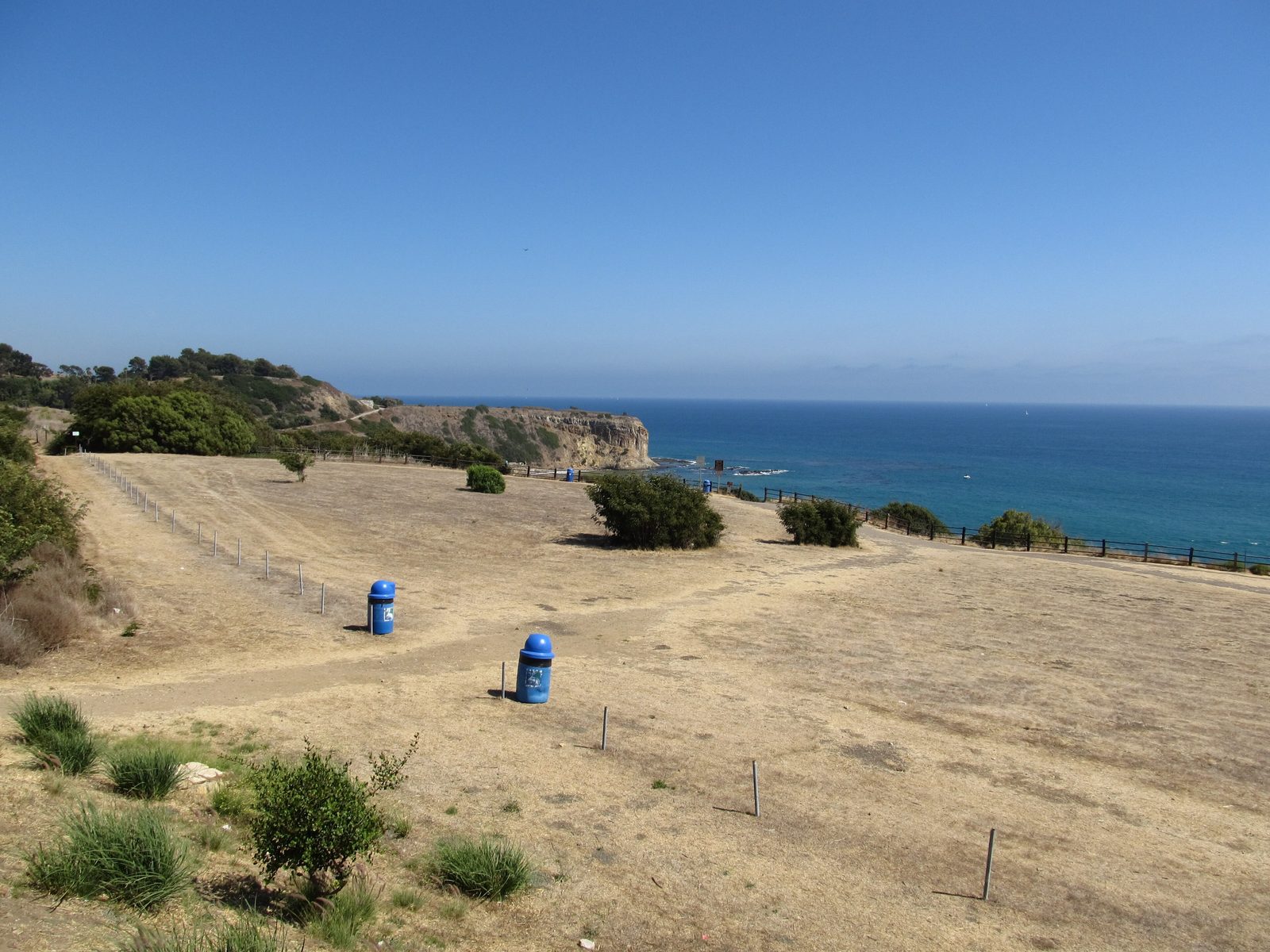
Hillside homes on the Palos Verdes Peninsula. Photo: Ken Lund from Reno, Nevada, USA, CC BY-SA 2.0, via Wikimedia Commons
The city is almost entirely residential. According to Wikipedia's city profile, the only commercially zoned land holds City Hall, the Rolling Hills Community Association and LA County Fire Station 56. Rolling Hills is surrounded by Rancho Palos Verdes on every side except the north, where it meets Rolling Hills Estates. The 2023 American Community Survey put the median household income above $250,000.
How Do the Gates and Access Rules Work in Rolling Hills?
Rolling Hills is a gated city with private roads and three guarded entry gates, maintained by the Rolling Hills Community Association (RHCA) rather than the city.
Local real estate sources describe entry as permit-based, with guests needing a resident's authorization to get through the gate. In practice, plan for friends, contractors, inspectors, appraisers and buyers' agents to need clearance before they arrive. The RHCA also maintains the private roads, community riding rings and tennis courts, and it levies its own assessment on each property.
Do this: before you write an offer, call the RHCA and ask about the current gate procedures, the annual assessment and its architectural review process, and build that cost and timing into your plans.
What Are the Zoning and Horse-Property Rules?
Rolling Hills zoning is built around large, horse-ready lots. The city's municipal code sets a minimum lot size of 43,560 square feet (one acre) in the RA-S-1 zone and 87,120 square feet (two acres) in the RA-S-2 zone, and the city's safety element describes the community as made up entirely of parcels of one acre or more.
- Horse property: owners must keep horse facilities or reserve land where a stable and corral could be built. The code calls for at least 1,000 square feet: 450 for a stable and 550 for a corral.
- Architecture: homes are single-story ranch or Spanish hacienda styles, and exteriors must be painted white.
- Trails: wide equestrian paths run along streets and property lines.
These rules protect the look of the community, but they limit what you can build. If you're planning a second story, a big addition or a lot split, assume it won't fly until the city and the RHCA tell you otherwise.
What Do Homes in Rolling Hills Cost?
Rolling Hills is among the priciest places on the Peninsula: Redfin reports a median sale price of about $5.9 million ($5,947,168) for the three months ending September 2026, up 69.9% from the same period a year earlier. Homes averaged 93 days on the market, compared with 61 a year earlier.
Treat that median with caution. Redfin counted only 8 sales in September 2026, so one or two large estates can push the median up or down by millions. The 2020 Census counted 702 housing units, and 610 of the 639 occupied homes were owner-occupied, about 95%. For pricing, a comparable sale on a similar-size lot with similar horse facilities is worth far more than the citywide median.
What Are the Schools Like?
Rolling Hills is in the Palos Verdes Peninsula Unified School District, which Niche grades A+ and ranks #3 of 465 districts in California (checked October 2026). The district's continuation school, Rancho del Mar High School, is on Crest Road in Rolling Hills, and its two comprehensive high schools, Palos Verdes Peninsula High and Palos Verdes High, are a short drive away. Private options nearby include Chadwick School and Rolling Hills Country Day School.
How Is the Commute from Rolling Hills?
Rolling Hills City Hall is about 15 miles from LAX and about 25 miles from downtown Los Angeles by car (Google Maps, shortest suggested route). There's no freeway or rail on the Peninsula, and every trip starts with the gate, so allow a few extra minutes for deliveries and guests too.
What Should Buyers Know Before Buying in Rolling Hills?
The biggest risks in Rolling Hills are wildfire, land movement and insurance, and all three deserve attention before you remove contingencies.
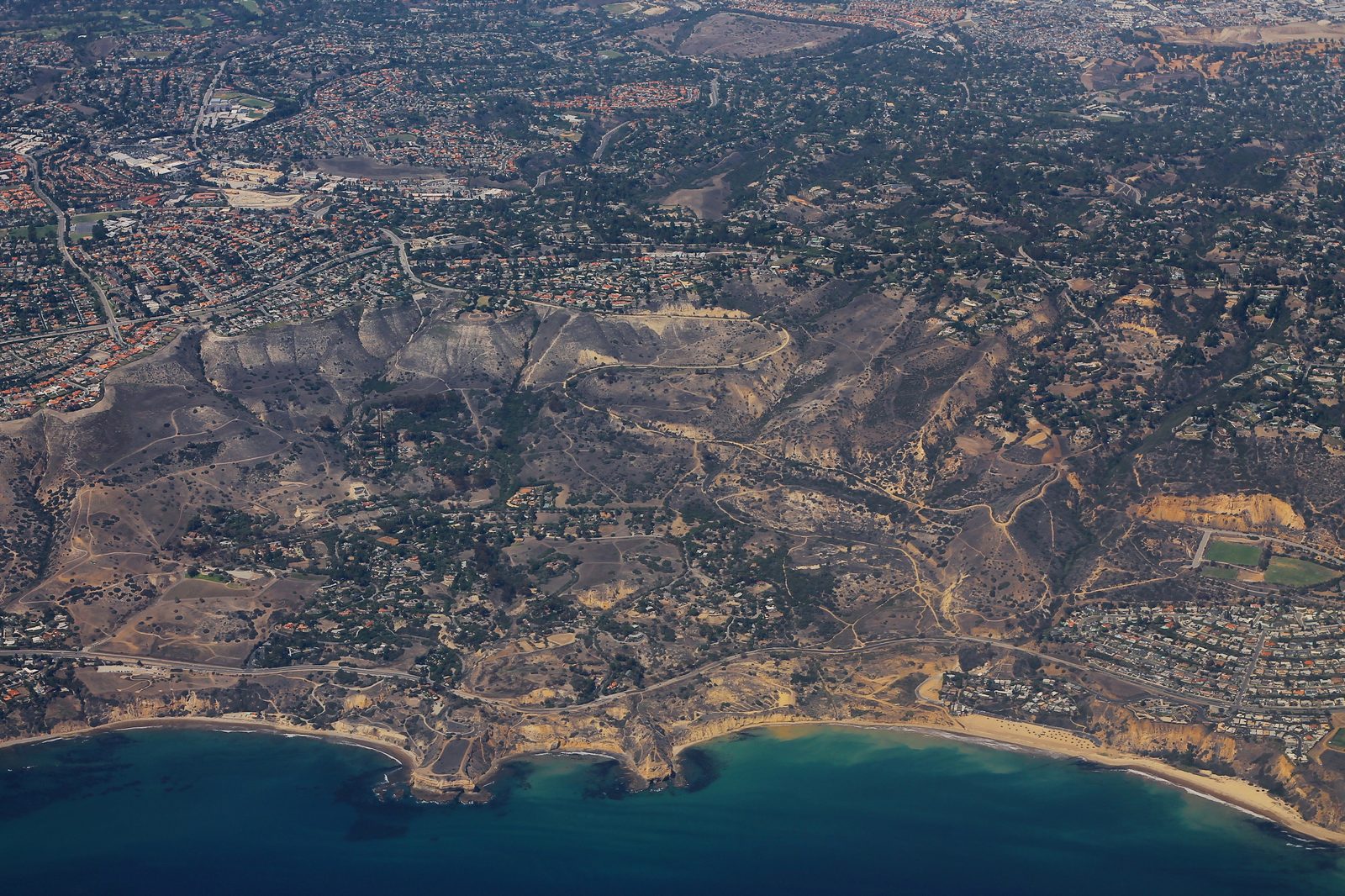
The Palos Verdes Peninsula from the air, including the Portuguese Bend area below Rolling Hills. Photo: formulanone, CC BY-SA 2.0, via Wikimedia Commons
Fire hazard severity zones
The city's Community Wildfire Protection Plan says CAL FIRE has designated all of Rolling Hills a Very High Fire Hazard Severity Zone, and the city's fire code adopts the State Fire Marshal's March 24, 2025 map. Local reports note fires in the community in 1979 and 2009. Expect defensible-space rules and stricter fire-safe building standards on remodels. The city publishes guidance on home hardening, canyon management and evacuating horses.
Land movement
The Portuguese Bend landslide in Rancho Palos Verdes reached into Rolling Hills in 2024. In September 2024, SoCalGas shut off gas to 34 Rolling Hills homes and Southern California Edison planned to cut power to about 51, according to ABC7, with the Flying Triangle area among those hit. City leaders directed staff to look into a voluntary buyout program modeled on Rancho Palos Verdes' program. In its January 7, 2026 update, the city said SCE had restored power to two more homes and planned further work only where movement had slowed to pre-2023 rates. Standard homeowners policies generally don't cover earth movement. For any home near the landslide area, read the city's land movement updates and get a geotechnical report.
Homeowners insurance
On September 18, 2026, the California Department of Insurance said State Farm had filed to resume writing new homeowners policies, but its filing focuses on homes meeting the strictest wildfire-prepared standards, and the department said "these companies are not open for new business yet." If no regular insurer will write a policy, the California FAIR Plan is the last resort, and it mainly covers fire, so you'd need a second policy for everything else. Get real quotes early.
Taxes and assessments
Property tax starts at the 1% base on your purchase price plus voter-approved bonds and assessments, plus the RHCA's own assessment, and a supplemental bill arrives after closing. Rolling Hills has no city transfer tax. The LA County documentary transfer tax is $1.10 per $1,000.
Pros and Cons of Living in Rolling Hills
Pros
- Gated, private roads and almost no through traffic
- Lots of one acre or more, zoned for horses, with trails throughout
- An A+ school district on Niche
- About 95% of occupied homes are owner-occupied
Cons
- A median sale price near $5.9 million, and very few homes for sale
- The whole city is in a Very High Fire Hazard Severity Zone, and insurance is hard to find
- Land movement in parts of the city since 2024
- Strict rules on style, color, single-story building and lot use
- No shops or restaurants inside the gates
Who Is Rolling Hills Best For?
Rolling Hills is best for buyers who want privacy, acreage and room for horses, and who are comfortable with gate procedures, strict design rules and a serious wildfire plan. It suits equestrian families and people who value quiet above convenience. It's a poor fit if you want a two-story modern home, a walkable neighborhood or easy insurance.
Considering Rolling Hills or the rest of the Peninsula? Search homes for sale, read our South Bay buyer's guide, or talk to our team. If you own in Rolling Hills, we can estimate your home's value.
This guide is general information, not legal, tax or insurance advice. Gate procedures, assessments, fire maps, land movement conditions and insurer availability change, so confirm details with the City of Rolling Hills, the Rolling Hills Community Association and licensed professionals.
Frequently Asked Questions
Can anyone drive into Rolling Hills, CA?
No. Rolling Hills is a gated city with private roads and three guarded gates run by the Rolling Hills Community Association. Local real estate sources say guests need a resident's authorization to enter, so contact the RHCA for current rules.
How many homes are in Rolling Hills?
The 2020 Census counted 702 housing units and 1,739 residents in Rolling Hills. Lots are one acre or more, and 610 of the 639 occupied homes were owner-occupied.
Do you have to have horses in Rolling Hills?
You don't have to own a horse, but the zoning requires horse facilities or land set aside for them. The municipal code calls for at least 1,000 square feet for a future stable and corral on each lot.
Is Rolling Hills the same as Rolling Hills Estates?
No. Both cities incorporated in 1957, but Rolling Hills is a small gated city with private roads, while Rolling Hills Estates is a larger, open city with public streets and the Peninsula's main shopping district.
Is Rolling Hills affected by the Portuguese Bend landslide?
Parts of it are. In September 2024, land movement led to gas shutoffs for 34 Rolling Hills homes and planned power shutoffs for about 51, and the city has explored a voluntary buyout program. Buyers should check the city's land movement updates for any specific address.
Featured image photo: formulanone, CC BY-SA 2.0, via Wikimedia Commons, cropped and edited with added text.
or another way