Categories
southbay neighborhood guides, torrancePublished October 30, 2026
Living in Torrance, CA: The Complete Guide

By Frank Kenny, REALTOR® (DRE #01250123) · Frank Kenny Real Estate Team, eXp Realty of Greater Los Angeles · Updated October 2026
Torrance is a large, family-oriented South Bay city of about 147,000 people with A-range public schools, its own beach, a deep job base and mostly single-family neighborhoods, priced below the beach cities next door. It feels like a collection of small towns, from the 1912 downtown of Old Torrance to the view streets of the Hollywood Riviera.
I've sold homes in Torrance since 1998, and it's where most of my work happens. This guide is the full overview: the facts, the neighborhoods, the homes and prices, the schools, things to do, the commute, and the costs and risks a buyer should check before making an offer.
Torrance at a Glance
| Fact | Torrance, CA |
|---|---|
| Population | 147,067 (2020 Census) |
| Size | About 24.6 square miles (20.5 square miles of land) |
| Founded / incorporated | Founded 1912; incorporated 1921 |
| ZIP codes | 90501–90505 (residential). Hollywood Riviera homes use a Redondo Beach 90277 address |
| County | Los Angeles County |
| School district | Torrance Unified: about 22,000 students; A-range overall grade on Niche (2026) |
| To LAX | About 15–20 minutes via the 405 without heavy traffic |
| To Downtown LA | About 20 miles; 30–45 minutes via the 110 |
| Typical homes | 1950s–60s single-story ranch homes, 1910s–20s bungalows in Old Torrance, condos and townhomes, hillside view homes |
| Owner-occupied homes | 54.6% (Census ACS, 2019–2023) |
| Market snapshot | Typical home value about $1.10 million, up 2.0% in a year (Zillow Home Value Index, August 2026) |
What Is It Like to Live in Torrance?
Living in Torrance feels suburban and practical: quiet residential streets, big parks, good schools and shopping close by, with the beach a short drive away. According to the 2020 Census, it's home to 147,067 people, on about 20.5 square miles of land.
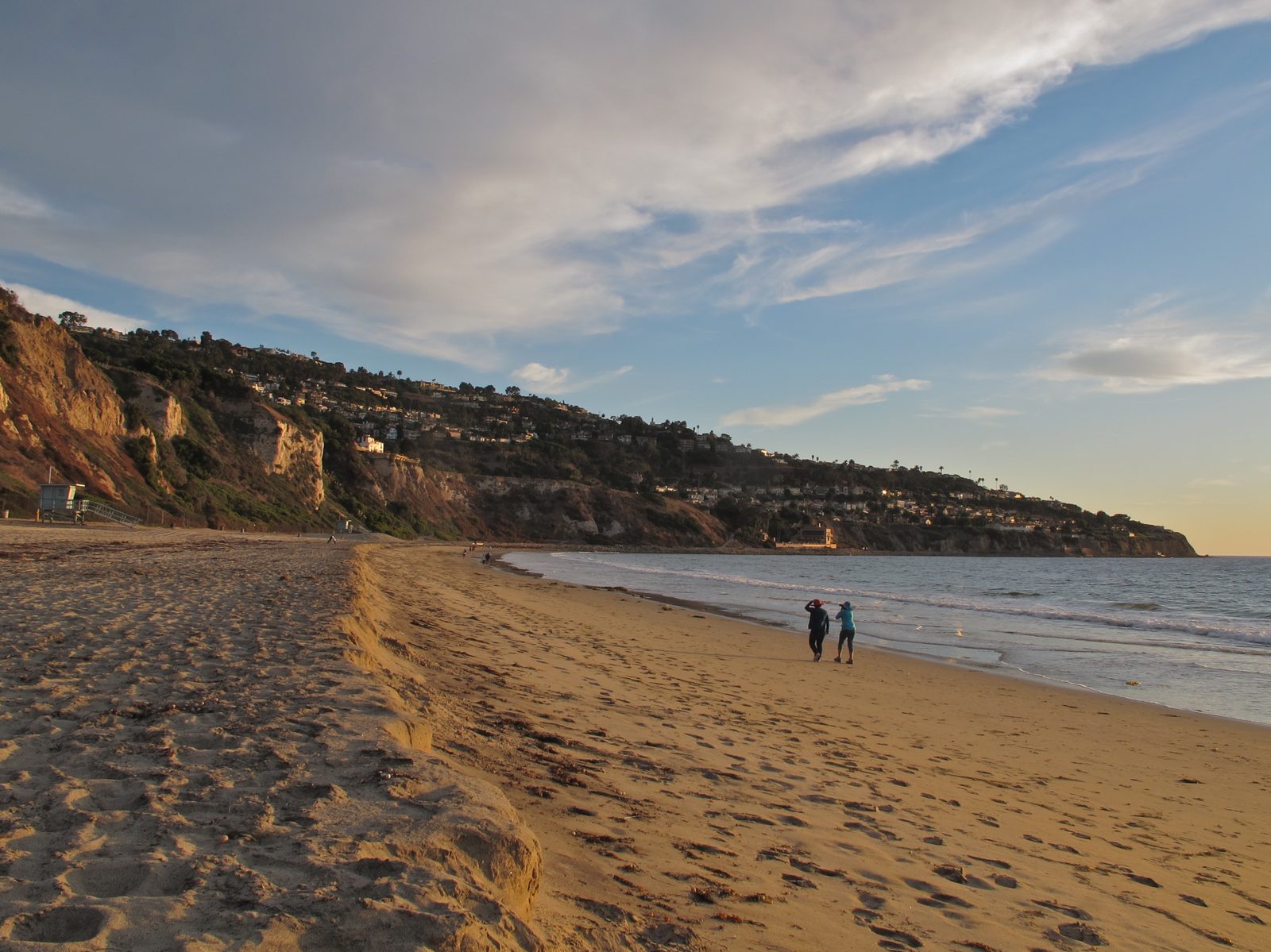
Torrance Beach, the city's stretch of sand below the Hollywood Riviera. Photo: DylanMoz49, CC BY-SA 4.0, via Wikimedia Commons
Torrance is also a working city, not just a bedroom community. Its largest employers include Torrance Memorial Medical Center, Torrance Unified, Providence Little Company of Mary, American Honda and Robinson Helicopter, according to the city's 2024 financial report. Many residents live and work here, which is a real advantage in Los Angeles traffic.
It has a strong Japanese influence, too. As of 2014, Torrance had the second-largest concentration of people of Japanese ancestry of any U.S. city, after Honolulu. You see it in the Mitsuwa and Nijiya markets, the ramen and bakery spots, and the city's sister-city ties to Kashiwa, Japan, which go back to 1973. In the 2020 Census, about 36% of residents identified as Asian.
Torrance runs its own police and fire departments and its own bus system, Torrance Transit. For safety, I don't use citywide rankings. The Torrance Police Department posts a crime map on the City's website, so you can look up the blocks you're actually considering.
What Are the Neighborhoods in Torrance?
Torrance's neighborhoods split roughly into North, Central, West and South Torrance, with smaller named areas inside each. These are the ones buyers ask about most:
- Old Torrance (Downtown): the original 1912 town, planned by the Olmsted Brothers, with craftsman bungalows, El Prado Park, Brewery Row and the monthly antique street fair. Read our Old Torrance neighborhood guide.
- Central Torrance: a residential pocket framed by Del Amo Fashion Center, 44-acre Wilson Park and the Madrona Marsh Preserve, with a mix of houses, townhomes and gated condo communities. See our Central Torrance neighborhood guide.
- North Torrance: mostly 1950s ranch homes near Columbia Park, El Camino College and North High. Much of it sits on expansive clay. See our North Torrance neighborhood guide.
- Del Amo area: the commercial center of the city around Hawthorne Boulevard and Carson Street, where most of Torrance's new apartments and townhomes are going up.
- West Torrance: family neighborhoods around West High School, on the side of town that borders Redondo Beach.
- South Torrance: the 90505 side of town, closest to the beach and the Palos Verdes hills. It includes:
- Hollywood Riviera: hillside view homes above Torrance Beach, split into the Upper and Lower Riviera. Homes have a Redondo Beach mailing address but are in Torrance and Torrance Unified. Read our Hollywood Riviera neighborhood guide.
- Riviera Village edge: the Lower Riviera streets within walking distance of Riviera Village, the shopping and dining district just over the line in Redondo Beach.
- Seaside (Seaside Ranchos): larger homes on bigger lots, best known for the "Sleepy Hollow" holiday lights on Robert Road, a tradition for more than 40 years.
- Southwood: quiet, tree-lined streets of mostly 1950s homes near the Riviera.
- Walteria: the area along Pacific Coast Highway below the Palos Verdes hills, with its own library branch and elementary school. Parts of it sit on the old Walteria Lake bed.
What Kind of Homes Are in Torrance, and What Do They Cost?
Most Torrance homes are single-family houses built after World War II, and prices run from the high $600,000s for condos to well over $2 million for Hollywood Riviera view homes. According to Zillow's Home Value Index, the typical Torrance home was worth about $1.10 million in August 2026, up 2.0% from a year earlier. The Census Bureau puts the median value of owner-occupied homes at $1,036,600 (2019–2023 estimates).
The housing stock changes by neighborhood:
- Ranch homes: the classic Torrance house is a 1950s or 1960s single-story ranch. Property records put the citywide median year built in the early 1960s. Many have been expanded or replaced with two-story homes.
- Bungalows: Old Torrance has craftsman bungalows and cottages from the 1910s and 1920s, plus newer condos and ADUs on the original small lots.
- Condos and townhomes: common in Central Torrance and the Del Amo area, and the most affordable way into the city.
- View homes: the Hollywood Riviera has everything from remodeled 1940s and '50s coastal homes to large new builds with Santa Monica Bay views.
Here's what homes actually sold for in the first half of 2026, from closed sales in our MLS (CRMLS):
| Area (H1 2026) | Median sold price | Closed sales |
|---|---|---|
| Old Torrance | $870,000 | 43 |
| Central Torrance (all home types) | $1.01 million | 47 |
| Hollywood Riviera | $2.28 million | 44 |
About 54.6% of Torrance homes are owner-occupied, according to Census estimates for 2019–2023, so you'll find plenty of rentals as well.
What Are the Schools Like in Torrance?
Torrance Unified School District serves almost all of Torrance and is one of the main reasons families move here. The California Department of Education counts 22,014 students for 2025–26, and Niche gave the district an A-range overall grade in its 2026 rankings.
- High schools: four comprehensive high schools (Torrance High, North High, South High and West High) plus Kurt Shery continuation high school. On Niche, West and South are graded A+, and North and Torrance High are graded A.
- Middle schools: eight, including Calle Mayor, Casimir, J.H. Hull, Jefferson, Bert Lynn, Madrona, Magruder and Richardson.
- Elementary schools: about 17 to 19, depending on how they're counted, including Riviera, Seaside, Walteria, Fern, Yukon and Torrance Elementary.
Two boundary quirks matter. First, Hollywood Riviera homes have a Redondo Beach mailing address but attend Torrance Unified, not Redondo Beach Unified. Second, school assignments go by address, not neighborhood name. Some North Torrance blocks, for example, feed Casimir Middle instead of Magruder. Always confirm the school for the exact address with the district.
What Is There to Do in Torrance?
Torrance mixes beach, parks and a lot of shopping and food. It has about 30 city parks and around 1.5 miles of Santa Monica Bay beachfront.
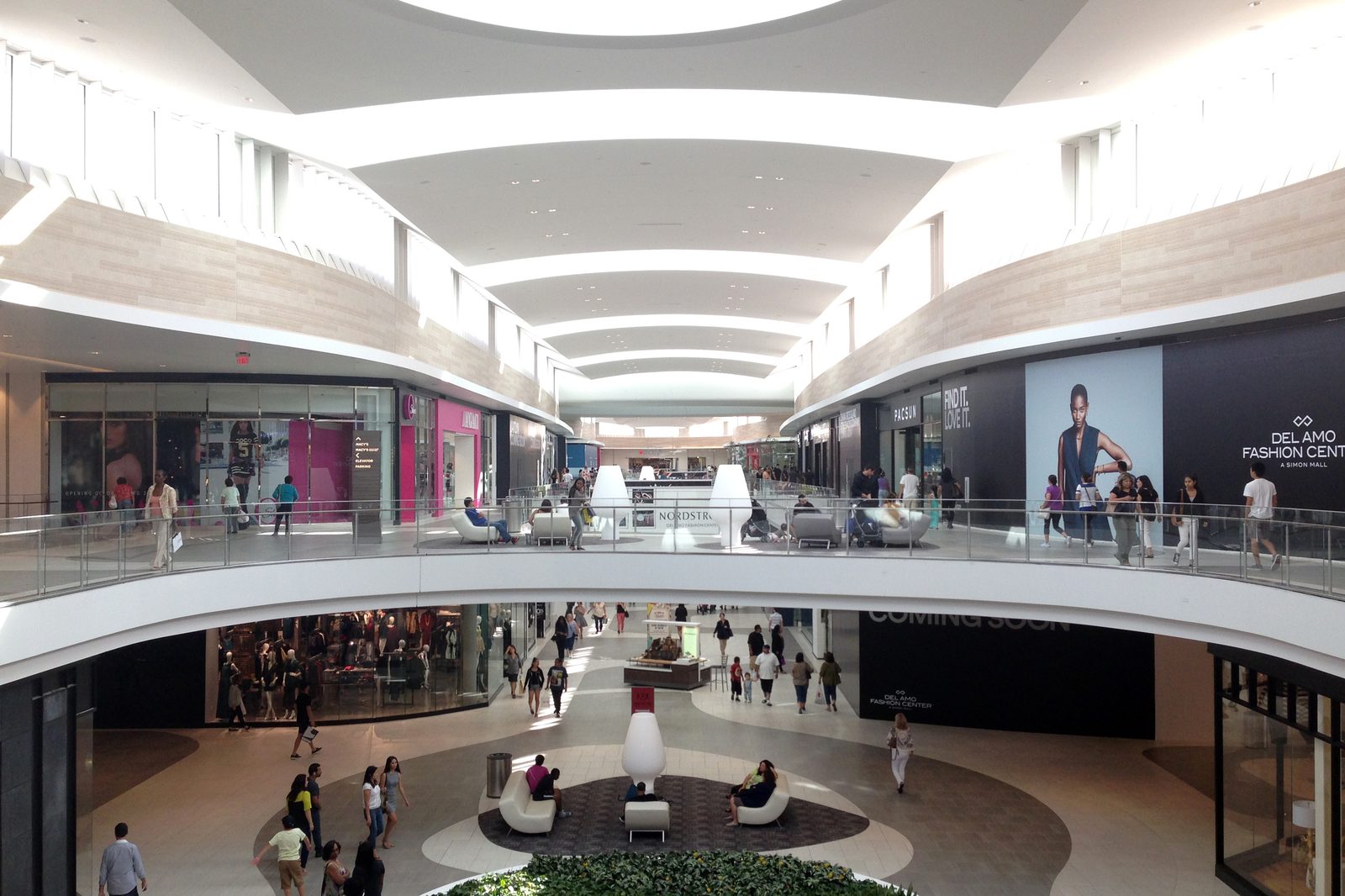
Inside Del Amo Fashion Center in Torrance. Photo: Rjung2k, CC BY-SA 4.0, via Wikimedia Commons
- Torrance Beach: a county beach at the foot of the Palos Verdes bluffs. The south end is called RAT Beach ("Right After Torrance"), and the Marvin Braude bike path runs north from here along the bay.
- Del Amo Fashion Center: about 2.5 million square feet, one of the ten largest malls in the country.
- Wilson Park: 44 acres with sports fields, a splash pad and the Torrance Certified Farmers' Market every Tuesday and Saturday, 8 a.m. to 1 p.m. The Tuesday market dates to 1985.
- Madrona Marsh Preserve: about 43 acres of seasonal wetland and coastal prairie in the middle of the city, with a nature center.
- Columbia Park: 52 acres in North Torrance, with fields, bocce courts and a walking path.
- Old Torrance: Brewery Row (Red Car, Smog City and Monkish), the Torrance Antique Street Fair on the fourth Sunday of each month, and historic Torrance High, which played "Sunnydale High" on Buffy the Vampire Slayer.
- Annual events: the Armed Forces Day Parade on Torrance Boulevard, held since 1960, and the Sleepy Hollow holiday lights in Seaside each December.
How Is the Commute from Torrance?
Torrance is a driving city with easy freeway access and a commute to LAX that's short by Los Angeles standards. The City's tourism bureau estimates about 15–20 minutes from LAX via the 405 and 30–45 minutes from Downtown LA via the 110, which is about 20 miles away. Expect longer drives at rush hour.
- Freeways: the 405 runs across North Torrance, and the 110 is along the east side. Hawthorne Boulevard (State Route 107) and Pacific Coast Highway are the main surface routes.
- Buses: Torrance Transit runs local lines and the 4X express to Downtown LA. The Mary K. Giordano Regional Transit Center opened in June 2023.
- Rail: there's no Metro rail station in Torrance today. The closest rail-style service is the Metro J Line bus at the Harbor Gateway Transit Center. In January 2026, Metro's board approved a route for the C Line extension, about 4.5 miles to the Torrance transit center, but there's no firm opening date.
What Should Buyers Know Before Buying in Torrance?
Every Torrance buyer should check five things before writing an offer: the property tax, the refinery, airport noise, the soil, and insurance. Most of them affect some streets far more than others.
Property tax and transfer tax
Under Prop 13, your tax starts at 1% of your purchase price plus voter-approved bonds. In Torrance, that usually comes to about 1.1%–1.2% of the price, and you'll get a supplemental tax bill after closing. Ask whether a newer development carries any special assessments. Torrance isn't on the county's list of cities with special transfer-tax rates, so the county's $1.10 per $1,000 applies. The City of LA's Measure ULA "mansion tax" doesn't apply in Torrance.
The Torrance refinery
The PBF Energy refinery covers about 750 acres at 3700 W. 190th Street in north-central Torrance. A 2015 explosion there, under the previous owner, ExxonMobil, was found preventable by the U.S. Chemical Safety Board, and flaring still happens from time to time. If you're looking nearby, visit on a weekday and a weekend, and sign up for South Coast AQMD flare notifications.
Zamperini Field airport
Torrance Municipal Airport (Zamperini Field) handles about 175,000 takeoffs and landings a year, including flight training and Robinson Helicopter's flights. The City bans touch-and-go landings and limits other training to 10 a.m. to 6 p.m. on weekdays. Check the City's Noise Lab portal for flight tracks over any home you're considering.
Expansive soil
The City of Torrance says expansive clay is found in most of North Torrance and in the old Walteria Lake area. This clay swells when wet and shrinks when dry, and homeowners policies usually exclude earth movement. Have a structural engineer look at any home in those areas, and read our Torrance expansive soil guide first.
Insurance and fire zones
California's insurance market is tight. State Farm stopped taking new homeowners applications in 2023, and more owners have ended up on the FAIR Plan. The State Fire Marshal's 2025 fire hazard maps also include an area of Torrance, so check the map for your address. Get a real insurance quote during your inspection period.
Pros and Cons of Living in Torrance
Pros
- Torrance Unified schools, graded in the A range on Niche
- Its own beach, plus Wilson Park, Madrona Marsh and about 30 parks
- Prices below the beach cities, with real yards
- A large local job base, so short commutes are possible
Cons
- Still expensive: the typical home is worth about $1.1 million
- The refinery, airport noise and expansive soil affect some streets
- No Metro rail station yet, so you'll drive most places
For the longer, opinionated version, see my honest take on moving to Torrance.
Who Is Torrance Best For?
Torrance is best for families who want strong public schools and a single-family home with a yard, for people who work in the South Bay, and for downsizers who want a single-story ranch in a neighborhood they know. Buyers who want to walk to the sand and to dinner every night will do better in Redondo, Hermosa or Manhattan Beach, or on the Riviera Village edge of the Hollywood Riviera, if the budget allows.
Thinking about Torrance? Talk with our team about the streets you're considering. We'll tell you what we know about each one, from the school assignment to the flight tracks.
This article is general information, not tax, insurance or legal advice. Confirm tax rates, insurance, hazard zones and school boundaries for the specific address.
Frequently Asked Questions
Is Torrance, CA a good place to live?
For many families, yes. Torrance has A-range public schools in Torrance Unified, its own beach, about 30 parks and a large local job base, at prices below the beach cities. The trade-offs, such as the refinery, airport noise and expansive soil, affect some streets far more than others.
How much does a house cost in Torrance?
The typical Torrance home was worth about $1.10 million in August 2026, according to the Zillow Home Value Index. In the first half of 2026, median sold prices ranged from about $870,000 in Old Torrance to $2.28 million in the Hollywood Riviera, based on closed MLS sales.
What school district is Torrance in?
Almost all of Torrance is served by Torrance Unified School District, which had 22,014 students in 2025–26 and four comprehensive high schools: Torrance, North, South and West. Hollywood Riviera homes have a Redondo Beach mailing address but are in Torrance Unified, so confirm the district for each address.
What are the best neighborhoods in Torrance?
It depends on what you want. The Hollywood Riviera and Seaside are closest to the beach, Old Torrance has the historic downtown, Central Torrance has the best access to Del Amo and Wilson Park, and North Torrance has the most 1950s ranch homes at lower prices.
How far is Torrance from LAX and Downtown LA?
Torrance is about 15–20 minutes from LAX via the 405 without heavy traffic. Downtown Los Angeles is about 20 miles away, or roughly 30–45 minutes via the 110.
Which parts of Torrance have expansive soil?
According to the City of Torrance, expansive clay is found in most of North Torrance and in the old Walteria Lake area. Have a structural engineer inspect any home there, since homeowners insurance usually excludes earth movement.
Featured image photo: Thurifer, CC BY-SA 4.0, via Wikimedia Commons, cropped and edited with added text.
or another way